
To be a “Dunce” or not, that is the question…

Preface and a disclaimer… the idea for this blog came from reading a snippet in Robert J. Morgan’s book, On This Day – 365 Amazing and Inspiring Stories about Saints, Martyrs & Heroes. Once again, reading can seriously damage your ignorance…

John Duns Scotus… born in Scotland, studied theology at Oxford (not Mississippi), birthdate unknown. Lived in the late 1200s to early 1300s. Scotus had a brilliant mind and challenged many things in medieval theology. However, like many great thinkers, he had more questions than answers… Becoming a master philosopher, linguist, theologian, and metaphysical thinker, he was also professor at the University of Paris.

Now… to the blog…
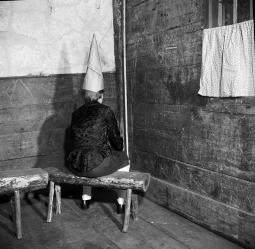
When you think of the word “dunce,” what comes to mind? Maybe a slow learner with a pointed cone hat, sitting in a corner from times old? Me too. Punishment for not knowing? Well, I’ll have to wear a “dunce” cone for it then. Keep reading…

Here’s what I did not know… John Duns Scotus; Scotus, identifying his Scottish heritage, Duns from his village name. Known as “The Subtle Doctor,” his students were tabbed as “Dunsmen.”

Back in the day, pointy hats were in style. Start thinking very old times and remembering wizards. It is said that the “cone hat” look inspired that image. Anyway… conical hats meant you were wise. “Dunsmen” started wearing them as a symbol of being wise and also a follower of “Scotism.”

Somewhere down the road, the “cone hat,” symbol of knowledge and wise, went a different direction. In the 1500s, the “Dunsmen” were thought to be “behind the times” and were labeled as slow, stupid because they would not accept “new views.” John Duns Scotus’s views troubled so many that the word “Dunce” was coined from the “Duns” in the middle name.
dunce-orlando

Can you now see where we are going?

“Dunsmen” became known as “dunces,” and their pointy hats became a symbol of ignorance… When public education in Europe and America came into being, per se, the “dunce cap” was used for discipline, punishment, etc. Now, thankfully, it has phased out.

So… as we have segued into education… do we still think of students being dunces? If so, why? The cap and the corner might be no longer used, but how often do we “label” a student? Yes, some students might not be as quick to get an answer, or maybe they are processing something differently. This doesn’t make them a dunce. Believe it or not, there are things that I have not caught on to as quick as others.

Education should help bring out the best in students. While best can be relatively defined, too often, teachers will quickly place their focus on those who can instead of those who cannot. Maybe they just need a little longer or a little more help. Why would a teacher not?

Time has a way of changing things… as you can see, this is exactly what happened… today what we view as a symbol of failing, once showed intellect and respect. I think I’ll go get a pointed hat…

Go be a great educator and leader today… Our future needs it…

Remember… Think Leadership and Be For Others…

©2021 J Clay Norton

Want more Leadership Thoughts? Follow me on…

Twitter @thebookchamber

Want to share this leadership thought with others? Click on one of the social media sharing buttons below and help spread the good…

Getting rid of the bitter taste of leadership…

Ugh… that tastes bitter. Even worse, that bitter taste can sometimes linger, and it begins to be all we think about; talk about distracting. It will probably hinder us from tasting the good of other things also.

But… what does bitter look like? Good question. Better yet, what does bitter leadership look like, and why is it such a thing? First, what is bitterness? A quick lookup gives this definition – having a sharp, pungent taste or smell, not sweet. Hello… not sweet, pungent… Talk about a bad quality of leadership… How about this statement, “I have a bitter taste in my mouth about…” Yep, been there, said that. Pungent… doesn’t even sound like a good word to say.

I would say, most of the time, our bitterness is always going to be with something or someone else. It mostly comes with disappointments which leads to frustrations, not only with yourself but others. Bitterness in your life affects so many things; confidence, mood, performance, likeability, respect… most of all, love. It deprives the sweetness of what leadership should be.

toxic_bitterness-1024x460

One area I see bitterness is in leaders who only think their way is “the only way.” They lead with blinders that prevent them from seeing anything anyone else has to say. By default, others begin to question, respect is lost, and their leadership becomes a facade, seen right through. I guess, in the end, bitterness comes and goes, but the effects can last much longer. A full circle runs through all people, especially when we do not get our way.

So… how can we fight bitterness? I am not sure there is an absolute answer. However, I have seen enough leaders with bitterness that I have some ideas on how I do not want to lead. First, be open to ideas and not have a closed-mind set. Second, be transparent with your leadership. If we can incorporate both of these concepts in our leadership, we will lead better, and others will not have to be bitter because you are.

Go figure and it sounds easy. However, when our EGO gets in the way, bitterness is going to taste bad. Let’s lead with a sweetness.

Go be a great educator and leader today… Our future needs it…

Remember… Think Leadership and Be For Others…

©2021 J Clay Norton

Want more Leadership Thoughts? Follow me on…

Twitter @thebookchamber

Want to share this leadership thought with others? Click on one of the social media sharing buttons below and help spread the good…

Seeing Faces Again…

This past week our school district lifted the mask mandate that has been in place for a while. Now masks are encouraged and optional. Before I begin with the blog, let me say that these thoughts are not about the mask mandate itself. It is not about political or religious views, cultural differences, one’s belief system to be vaccinated or not, the science, or any other reason a person chooses to wear or not wear a mask. Today’s thoughts are about seeing facial expressions, and that’s it…

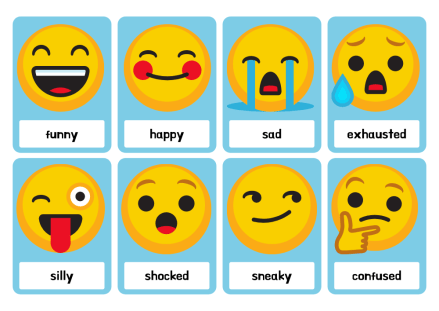
For the first time since March of 2019, educators in our school can now see the faces of many of our students, and it is refreshing. As a teacher, seeing the facial reaction of students can say a lot, especially when a student does not say much, to begin with. Outside of words, a person’s face is the next best communicator one has to express themselves. A student’s face conveys a wealth of information. It can help a teacher determine their mood, their engagement, their emotions… which leads to feedback, and that is what teachers want to see.

1-Emoji-feelings-flashcards

One of the best attributes I think a teacher can have is having the capability to determine if they can see a student’s mind changing. Better yet, having those Jedi powers and “feel the force” of seeing the effect of mind-changing moments taking place. No more do we need to hold emoji flashcards to see what a student is experiencing. As an educator, seeing understanding or the lack of, on our students’ faces is key to how we continue our lessons many times. Do we go on, pause, restate, start over, etc…

On another note, think about this… Students can see your facial expressions also. As Haim Ginott said, “I’ve come to a frightening conclusion that I am the decisive element in the classroom. It’s my personal approach that creates the climate. It’s my daily mood that makes the weather…” That personal approach is seen on our faces before we ever speak a word to our classes. What did/will your students see today in your class?

Facial expressions… yes, they communicate thoughts, good to be able to see them again.

Go be a great educator and leader today… Our future needs it…

Remember… Think Leadership and Be For Others…

©2021 J Clay Norton

Want more Leadership Thoughts? Follow me on…

Twitter @thebookchamber

Want to share this leadership thought with others? Click on one of the social media sharing buttons below and help spread the good…

The Need for Student-led Leadership…

This past Wednesday was our school’s monthly FCA (Fellowship of Christian Athletes) Huddle meeting. As I sat in the back of the room with some other coaches, I realized we have a great group of students. Not just in FCA but all around in our school, belonging to other clubs, or just attending school. Yes, we have some great students.

However, what I realized sitting back, watching and listening, is the value of leadership and the opportunity these students have to be leaders in our school. So… that brings me to the thought of the need for student-led leadership in our schools…

1527154172

I believe there is somewhat of a direct correlation between the culture the school wants and the one that the student body embraces. One question that might have to be asked is how to get students to “buy-in” the culture school leaders want.

For this to happen, I believe it is essential for students to experience leadership opportunities that put them in positions to actually lead. Whatever, wherever, whenever that is, it must be an opportunity where the platform establishes quality leadership that coincides with the vision and the mission of the school.

When students are given the opportunity to lead, more relationships can be fostered. Our students are the best customers to sell the product of leadership that we want as educational leaders. They will reach far more than a single teacher ever can. If we want positive leadership to be a mainstay, our students are the best communicators, translators of our message. They are the ones who can “carry out” the leadership wants and needs of the school.

Just like quality adult leaders, students who communicate and lead effectively can be found to have many of the same traits; honesty, responsible, serving, open-mindedness, etc. But… they need examples, and we have to make sure we are doing and showing what we expect.

Having students who lead in our schools demonstrate an earned empowerment. In turn, they demonstrate and promote leadership at a level that encourages involvement and creates a positive atmosphere for the whole school setting. As the educational leaders of our school, let’s find ways to help empower our students to be leaders, and I believe it starts in the classrooms. Yes, they will need to be supported and encouraged, but is that not part of “jobs” as educators?

Go be a great educator and leader today… Our future needs it…

Remember… Think Leadership and Be For Others…

©2021 J Clay Norton

Want more Leadership Thoughts? Follow me on…

Twitter @thebookchamber

Want to share this leadership thought with others? Click on one of the social media sharing buttons below and help spread the good…