
• Home
  • About
  • Contact

The Book Chamber

~ J Clay Norton, Ed.D.

The Book Chamber

Category Archives: Purpose

Seeing Clearly: What Contacts, Care, and Spring Pollen Teach Us About Educational Leadership

17 Friday Apr 2026

Posted by The Book Chamber in Actions, Christian Worldview, Clarity, Classroom Leadership, Clear, Consistency, Educational Leadership, Effective, Intentional, Leader, Leadership, Purpose, Vision

≈ Leave a comment

Tags

Education, Educational Leadership, Leader, Leadership, Learning, Respect, school, Teachers, teaching

I wear contacts, and there is nothing worse than dealing with that annoying film that builds up on them during the day, especially in the spring when pollen seems to take over everything. When I wake up in the morning, my contacts are clean, having sat all night in solution, ready for the day ahead. But forget to clean them? For those of you who wear contacts, you already know how that feels. Cloudy, uncomfortable, and distracting in a way that is hard to ignore.

There is something almost symbolic about putting in contact lenses each morning. You begin the day with intention, correcting your vision so you can engage the world as it really is, not as a blur of approximations. For educational leaders, that simple routine offers a surprisingly powerful metaphor. Clarity is not automatic. It is maintained through consistent care, thoughtful habits, and awareness of the environment.
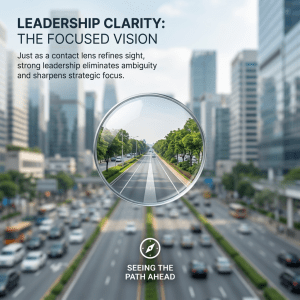
Clarity Is Not Accidental

Wearing contacts requires preparation. You do not just wake up and see clearly. You clean the lenses, use the right solution, and handle them carefully. Skip those steps, and discomfort or even damage follows.

Leadership works the same way. Clear vision, knowing your purpose, priorities, and values, does not happen by chance. It comes from deliberate reflection and upkeep:

  • Revisiting your mission
  • Aligning decisions with core values
  • Communicating expectations consistently

Without that kind of reflection and alignment, even the best intentions can become cloudy.

The Role of “Solution” in Leadership

Contact solution is not optional. It keeps lenses usable. It cleans away buildup, disinfects, and restores clarity.

In schools, “solution” looks like:

  • Honest feedback loops
  • Professional learning
  • Time for reflection and recalibration

Leaders who neglect this step often find their organizations drifting. Small issues accumulate. Miscommunication, unclear expectations, and staff fatigue build up until the entire system feels irritating, like a dry lens you tried to ignore for too long.

Spring Pollen: External Forces Matter

Then comes spring. Pollen fills the air, and suddenly your eyes are more sensitive, your lenses less comfortable, and your vision slightly compromised. Even when you have done everything right, the environment still affects you.

Pollen can also represent the environment we lead in. Sometimes we cannot avoid it, but we can be prepared for it. Often, it comes straight to us, bringing challenges, distractions, and pressures we did not invite but still have to manage.

Schools experience their own version of “pollen”:

  • Policy changes
  • Community pressures
  • Testing cycles
  • Seasonal fatigue

Effective leaders do not pretend these factors do not exist. They anticipate them. They adjust expectations, provide support, and recognize that performance dips or tensions may be environmental, not personal.

Adjusting Without Losing Vision

When pollen is high, contact wearers adapt:

  • Using rewetting drops
  • Limiting wear time
  • Switching to glasses when needed

Educational leaders must do the same. Clarity of vision does not mean rigidity in practice. It means staying grounded in purpose while adjusting strategies:

  • Offering flexibility during stressful periods
  • Prioritizing well-being alongside achievement
  • Knowing when to push forward and when to pause

The Discipline of Daily Care

Perhaps the most overlooked lesson is consistency. Clear eyesight is not achieved once. It is maintained daily. Skip a night of proper lens care, and you feel it the next day.

Leadership clarity is no different. It is built through small, repeated actions:

  • Checking in with staff
  • Being visible and present
  • Reinforcing what matters most

These are not grand gestures. They are the everyday habits that keep the organization seeing clearly.

A Deeper Lens

From a Christian perspective, clarity is not just about what we do. It is about how we see. In Ephesians 1:18, Paul writes, “I pray that the eyes of your heart may be enlightened.” True vision goes deeper than what is in front of us. It shapes how we understand, lead, and respond to others.

Like contact lenses, our perspective can become clouded. Not just by busyness or external pressures, but by pride, fear, distraction, or misplaced priorities. Left unattended, these things distort how we lead, how we serve, and how we care for others.

Final Thought

Clear vision in leadership is not just about what you see. It is about how you care for your ability to see. Like contact lenses, it requires attention, maintenance, and adaptation to the environment.

And just like spring pollen reminds us, even the clearest vision can be challenged. The goal is not perfection. It is awareness, responsiveness, and the discipline to keep cleaning the lens.

Because when leaders see clearly, schools move with purpose.

As you step into your role today, remember that you are not just an educator and leader but a shaper of the future. Your actions and decisions profoundly impact the lives of those you guide. Go, be the great educator and leader that our future needs.

Remember… Think Leadership and Be For Others…

©2026 J Clay Norton

Want more Leadership Thoughts? Follow me on… X @thebookchamber or follow the blog directly.

Share this:

  • Tweet
  • Email a link to a friend (Opens in new window) Email
  • More
  • Print (Opens in new window) Print
  • Share on Tumblr
Like Loading...

What we think is negativity can be very positive for your leadership health… Think guardrails…

13 Friday Feb 2026

Posted by The Book Chamber in Boundaries, Christian Worldview, Clarity, Classroom Leadership, Conflict, Conviction, Courage, Deciding, Decisions, Education, Educational Leadership, Focus, Integrity, Leader, Leadership, Mission, Purpose, Vision

≈ Leave a comment

Tags

business, Education, Educational Leadership, Leader, Leadership, Learning, school, Teachers, teaching

As a former math teacher, I could fundamentally explain that two negatives make a positive, but that would probably bore you. However, when it comes to leadership, the equation is far more interesting. In leadership, many negatives can actually yield profoundly positive results.

One of the most powerful and most underutilized tools in leadership is the word “no.” Or perhaps it is simply misunderstood, because it almost always comes across as negative.

Many leaders struggle to say it and to accept it. We want to be seen as supportive, empowering, and collaborative. At the same time, we want others to say yes to us. We fear that saying “no” will disappoint people, limit opportunity, or damage morale. And honestly, we do not like hearing it either.

So, as leaders, do we say yes too often? Yes to this? Yes to that? Some say yes to whatever is asked. Others say yes simply to keep the peace.

But every yes costs something.
Time. Energy. Attention. Clarity.

When “no” is never said, it can open the floodgates. What begins as a small ripple effect can quickly become a current that pulls the entire organization off course. An organization slowly loses alignment. Vision becomes fuzzy. Priorities compete. Teams burn out. Ironically, the attempt to stay positive by avoiding negativity can cause long-term, sometimes irreversible, damage.

Healthy leadership understands that “no” is not rejection; it is protection, even if we only see it clearly afterward.

No protects the mission from distraction.
No protects the team from overload.
No protects values from compromise.
No protects culture from confusion.

Saying no requires courage because it invites discomfort. It may lead to difficult conversations. It may create temporary tension. But clarity always outperforms chaos. A focused organization will accomplish more than a scattered one.

From a Christian worldview, this paradox is not surprising. The Ten Commandments are primarily stated in the negative: “You shall not…” At first glance, they appear restrictive. Yet they are profoundly life-giving. Each “do not” protects something beautiful: our trust, our faithfulness, our integrity, our rest, and our reverence. The negative wording guards a positive outcome. Boundaries create freedom. Limits cultivate flourishing.

Leadership works the same way. Clear “no’s” protect the organization’s mission. Constructive criticism protects future success. Honest confrontation protects relationships. When handled with humility and wisdom, negative moments become protective guardrails rather than destructive forces.

In fact, a leader’s health can often be measured by their ability to understand that “no” can be a positive, whether said or heard, without guilt. When you are secure in your calling and clear on your purpose, “no” becomes easier. It becomes strategic. It becomes generous. It becomes positive.

So perhaps the math lesson still applies after all. Two negatives make a positive, not because negativity is good in itself, but because it can be redeemed. Leadership health is not the absence of negativity. It is the ability to transform it. When you learn that “no” creates life-giving boundaries, you discover that what once felt like subtraction or division is actually addition and multiplication.

As you step into your role today, remember that you are not just an educator and leader but a shaper of the future. Your actions and decisions profoundly impact the lives of those you guide. Go, be the great educator and leader that our future needs.

Remember… Think Leadership and Be For Others…

©2026 J Clay Norton

Want more Leadership Thoughts? Follow me on… X @thebookchamber or follow the blog directly.

Want to share this leadership thought with others? Click on one of the social media sharing buttons below and help spread the good…

Share this:

  • Tweet
  • Email a link to a friend (Opens in new window) Email
  • More
  • Print (Opens in new window) Print
  • Share on Tumblr
Like Loading...

Educational Leadership and the Responsibility of an Audience Face

30 Friday Jan 2026

Posted by The Book Chamber in Audience Face, Authentic, Balance, Character, Choice, Decisions, Educational Leadership, Emotion, Emotional Temperature, Essence, Illusions, Image, Know Your Why, Leader, Leadership, Preparation, Purpose, Relationships, Respect, Responsibility, Trust, Truth

≈ Leave a comment

Tags

Education, Educational Leadership, Leader, Leadership, Learning, Respect, school, Teachers

One day last week, while driving to school and listening to the radio, I heard a broadcaster joke that he had a “face for radio.” It is a familiar phrase, but it caught my attention in a different way this time. As I listened, I started thinking about how often we talk about “face” in leadership, the face we put on, the face we show in difficult moments, or the face others come to expect from us.

The more I reflected on it, the more I realized that educational leaders are constantly showing their face, and often their facial reactions, whether they intend to or not. Leadership, especially in schools, is always happening in public.

So, here is what I think about educational leaders and the idea of having an audience face.

Educational leaders are rarely out of view. Classrooms, hallways, meetings, community forums, and informal interactions all function as public spaces. Leadership in schools is not only about decisions made behind closed doors, but about how those decisions are embodied in front of others. This is where the concept of an audience face becomes central to effective educational leadership.

An audience face is the consistent public presence a leader brings into shared spaces. It is shaped less by isolated moments and more by patterns, including how a leader responds under pressure, communicates priorities, and navigates uncertainty. In schools, where trust and morale are fragile and hard won, this presence matters deeply.

Why an audience face is necessary in educational leadership

From a leadership perspective, having an audience face is not optional. Schools are complex organizations, and ambiguity from leadership often creates instability. A well-formed audience face helps reduce that uncertainty.

A constructive audience face provides:

  • Clarity: Leaders signal what matters through what they emphasize, tolerate, and address publicly.

  • Consistency: Predictable leadership behavior builds trust and reduces organizational anxiety.

  • Psychological safety: When leaders are steady and transparent, educators feel safer taking professional risks.

  • Cultural direction: How leaders show up teaches others how to behave, respond, and lead themselves.

In this sense, the audience face is not about image management. It is about sense making. People look to leaders to interpret the environment, especially during moments of tension or change.

The role of discernment, not performance

A common misconception is that an audience face requires emotional distance or artificial positivity. In reality, effective leaders practice discernment. They understand that not every reaction belongs in public space and not every concern should be processed collectively.

An intentional audience face helps leaders:

  • Decide what should be addressed publicly versus privately

  • Regulate emotional responses without denying them

  • Hold steady when others are uncertain or overwhelmed

This is not suppression. It is professional judgment. Educational leaders carry positional power, and how they express emotion, frustration, or doubt has ripple effects throughout the system.

When an audience face becomes a liability

An audience face becomes harmful when it shifts from alignment to performance. Educators are highly sensitive to inconsistency, and trust erodes quickly when public messaging does not match lived experience.

Warning signs include:

  • Saying what sounds right instead of what is accurate

  • Projecting confidence without follow through

  • Avoiding difficult truths to preserve approval

  • Becoming overly attached to maintaining a leader image

In these cases, the audience face functions as a mask rather than a stabilizing presence.

A reflective leadership practice

Strong educational leaders treat their audience face as an ethical responsibility. They regularly ask:

  • What do my public actions communicate about our priorities?

  • What patterns am I reinforcing through my responses?

  • How does my presence affect trust, morale, and decision making?

Ultimately, leadership in schools is not defined by visibility but by impact. The audience face is one of the most powerful tools leaders have to shape culture, signal values, and guide organizations through complexity. Used intentionally, it strengthens trust and coherence. Neglected, it allows confusion and misalignment to grow. In educational leadership, how one shows up in front of others is not secondary work. It is central to the work itself.

As you step into your role today, remember that you are not just an educator and leader but a shaper of the future. Your actions and decisions profoundly impact the lives of those you guide. Go, be the great educator and leader that our future needs.

Remember… Think Leadership and Be For Others…

©2026 J Clay Norton

Want more Leadership Thoughts? Follow me on… X @thebookchamber or follow the blog directly.

Want to share this leadership thought with others? Click on one of the social media sharing buttons below and help spread the good…

Share this:

  • Tweet
  • Email a link to a friend (Opens in new window) Email
  • More
  • Print (Opens in new window) Print
  • Share on Tumblr
Like Loading...

“Don’t Just Tell Them Not to Forget… Tell Them to Remember”

17 Friday Oct 2025

Posted by The Book Chamber in Culture, Educational Leadership, Intentional, Know Your Why, Leader, Leadership, Purpose, Remember, Value

≈ Leave a comment

Tags

business, Education, Educational Leadership, Leader, Leadership, Learning, Respect, school, Teachers, teaching

I am currently reading The Barn – The Secret History of a Murder in Mississippi by Wright Thompson. If you have not read the book, I highly recommend it. The book honors both personal heritage and the enduring lessons drawn from the story of Emmett Till that continue to shape the South’s identity and hope. On a personal note, as I mentioned to a friend the other day who is also reading the book, Chapter Two contains the best history of Mississippi that I have ever read or heard, encompassing many aspects of Mississippi history that I never learned in school. Throughout the book, a theme emerges that I keep seeing: “Don’t just tell them not to forget, tell them to remember.” As I reflect on this theme, I see how it highlights how often we tell people, “Don’t forget,” but rarely do we say, “Remember.” What a subtle difference, but a powerful one, especially in education and leadership.

“Don’t forget” is defensive. It’s a warning, a plea against loss. It assumes negligence and expects compliance. “Remember,” on the other hand, is invitational. It calls us to hold something sacred, to intentionally bring forward what matters most. One is about avoiding failure; the other is about preserving meaning. It’s about taking ownership of what we hold dear.

This idea of remembrance isn’t just philosophical, it’s timeless. Even in popular culture, echoes of this truth appear. In the movie 300, King Leonidas commands his soldiers, “Remember this day, men, for it will be yours for all time.” His charge was not merely about memory; it was about meaning. It was a call to anchor courage, sacrifice, and identity in something worth remembering. Later, as the lone survivor, Dilios fulfills his king’s final wish: “Remember us. As simple an order as a king can give. Remember why we died.” These lines capture the essence of remembrance as legacy, holding fast to what gives purpose to the struggle.

Educational leaders face this tension every day. General thoughts consist of… We are reminded not to forget deadlines, lesson plans, or data reporting, but do we invite educators to remember why they teach? We caution students not to forget assignments, but do we spend time helping them remember the joy of discovery, the dignity of effort, the wonder of learning? We are an integral part of this process, and our value lies within the core of how we help others connect their work to purpose. 

To “remember” is to root ourselves in purpose. It is to carry forward the lessons, values, and relationships that shape our work. I believe when we lead from a remembrance mindset, we help others reconnect with the “why” beneath the “what.” We help build and sustain cultures where the vision and mission are not just recited but recalled from personal experience, vividly and often. Remembering becomes intentional. 

This act of remembrance is also deeply rooted in Christian values at its core. Throughout Scripture, God continually calls His people to remember. “Remember the Lord your God” (Deut. 8:18). “Do this in remembrance of Me” (Luke 22:19). When we remember God’s faithfulness, we lead differently. We teach with patience, we listen with compassion, and we serve with humility. God knows that what we remember shapes what we value, and what we value directs how we lead.

So today, don’t just tell others not to forget. Tell them to remember. We all have the capability to instill this mindset in others around us. So, why not give it a try? 

So maybe the better question is not “What have we forgotten?” but “What must we remember?”

Remember the teacher who made a difference in your life, Remember the student who just needed one person to believe in them, Remember that education is a calling for you for our future, Remember who others are, Remember the One who called you, And in that remembering, remember to keep the heart of education alive…

As you step into your role today, remember that you are not just an educator and leader but a shaper of the future. Your actions and decisions profoundly impact the lives of those you guide. Go, be the great educator and leader that our future needs.

Remember… Think Leadership and Be For Others…

©2025 J Clay Norton

Want more Leadership Thoughts? Follow me on… X @thebookchamber or follow the blog directly.

Share this:

  • Tweet
  • Email a link to a friend (Opens in new window) Email
  • More
  • Print (Opens in new window) Print
  • Share on Tumblr
Like Loading...
← Older posts
Follow The Book Chamber on WordPress.com

Enter your email address to follow this blog and receive notifications of new posts by email.

Follow me on Twitter

My Tweets

Archives

  • April 2026 (2)
  • March 2026 (1)
  • February 2026 (2)
  • January 2026 (2)
  • December 2025 (2)
  • November 2025 (2)
  • October 2025 (3)
  • September 2025 (2)
  • August 2025 (1)
  • June 2025 (1)
  • May 2025 (4)
  • April 2025 (4)
  • March 2025 (2)
  • February 2025 (4)
  • January 2025 (4)
  • December 2024 (4)
  • November 2024 (4)
  • October 2024 (2)
  • September 2024 (4)
  • August 2024 (4)
  • May 2024 (2)
  • April 2024 (4)
  • March 2024 (3)
  • February 2024 (4)
  • January 2024 (3)
  • December 2023 (4)
  • November 2023 (3)
  • October 2023 (3)
  • September 2023 (4)
  • August 2023 (4)
  • July 2023 (1)
  • May 2023 (3)
  • April 2023 (4)
  • March 2023 (4)
  • February 2023 (4)
  • January 2023 (3)
  • December 2022 (4)
  • November 2022 (3)
  • October 2022 (4)
  • September 2022 (5)
  • August 2022 (3)
  • May 2022 (4)
  • April 2022 (5)
  • March 2022 (3)
  • February 2022 (4)
  • January 2022 (4)
  • December 2021 (3)
  • November 2021 (3)
  • October 2021 (5)
  • September 2021 (4)
  • August 2021 (3)
  • May 2021 (3)
  • April 2021 (5)
  • March 2021 (3)
  • February 2021 (3)
  • January 2021 (4)
  • December 2020 (3)
  • November 2020 (3)
  • October 2020 (5)
  • September 2020 (4)
  • August 2020 (2)
  • June 2020 (1)
  • May 2020 (3)
  • April 2020 (4)
  • March 2020 (1)
  • February 2020 (4)
  • January 2020 (4)
  • December 2019 (3)
  • November 2019 (4)
  • October 2019 (4)
  • September 2019 (4)
  • August 2019 (3)
  • July 2019 (1)
  • June 2019 (1)
  • May 2019 (3)
  • April 2019 (4)
  • March 2019 (4)
  • February 2019 (4)
  • January 2019 (3)
  • December 2018 (3)
  • November 2018 (4)
  • October 2018 (4)
  • September 2018 (4)
  • August 2018 (4)
  • July 2018 (1)
  • June 2018 (1)
  • May 2018 (4)
  • April 2018 (4)
  • March 2018 (4)
  • February 2018 (4)
  • January 2018 (3)
  • December 2017 (4)
  • November 2017 (3)
  • October 2017 (4)
  • September 2017 (5)
  • August 2017 (3)
  • July 2017 (1)
  • June 2017 (4)
  • May 2017 (19)
  • April 2017 (9)

Categories

  • A Christmas Story
  • Accountability
  • Achieve
  • Achievement Gap
  • ACME Math Guys
  • Acquaintance
  • Actions
  • Adaptability
  • Advantage
  • Adventure
  • Adversity
  • Advice
  • Advocate
  • Affection
  • Agenda
  • Align
  • Amazing
  • Amnesia
  • Anchored
  • Andy Griffith
  • Annoying
  • Appreciation
  • Assist
  • Attention
  • Attitude
  • Audience Face
  • Authentic
  • Balance
  • Banning Books
  • Bitterness
  • Boundaries
  • Brand
  • Camaraderie
  • Captive
  • Change
  • Character
  • Charlie Brown
  • Choice
  • Christian Worldview
  • Christmas
  • Christmas Vacation
  • Circumstances
  • Clarity
  • Classroom Leadership
  • Classroom Management
  • Clear
  • Comfort Zone
  • Commitment
  • Communication
  • Company
  • Compassion
  • Complacency
  • confidence
  • Conflict
  • Connections
  • Conscience
  • Consistency
  • Contentment
  • Context
  • Conversations
  • Conviction
  • coronavirus
  • Counseling
  • Courage
  • COVID-19
  • covid19
  • Craft
  • Crisis
  • Culture
  • Decay
  • Deciding
  • Decisions
  • Decline
  • Description
  • Desire
  • Detox
  • Dignity
  • Diplomacy
  • Disaster
  • Distance
  • Distance Learning
  • Distractions
  • Dr. Seuss
  • Drift
  • Easter
  • Echo Chamber
  • Education
  • Educational Leadership
  • Effective
  • Embrace
  • Emotion
  • Emotional Temperature
  • Empathy
  • Empower
  • Encouragement
  • Engagement
  • Entertainment
  • Essence
  • Exercise
  • Expectations
  • Experience
  • Expertise
  • Expiration dates
  • Facade
  • Fair and Equitable Education
  • Family
  • Feedback
  • Focus
  • Foundation
  • Freedom
  • Friendship
  • Funding
  • Future
  • Gift
  • Giving
  • God
  • Grace
  • Grading
  • Gratitude
  • Gravitas
  • Grit
  • Growth
  • Heart
  • Heroes
  • History
  • Honest
  • Hope
  • Hope Stealer
  • Humility
  • Idealist
  • Ideals
  • Idioms
  • Illusions
  • Image
  • Importance
  • Influence
  • Insecurity
  • Inspiration
  • Integrity
  • Intensity
  • Intentional
  • Intentions
  • Intolerance
  • Issues
  • It's a Wonderful Life
  • Jesus
  • Joy
  • Kindness
  • Know Your Why
  • Knowledge
  • Leader
  • Leadership
  • Learning
  • Legacy
  • Legislators
  • Lesson Plans
  • Light
  • Listening
  • Looney Tunes
  • Love
  • Loyalty
  • Mandates
  • Manipulation
  • Mask
  • Math
  • Maturity
  • Meetings
  • Memories
  • Mercy
  • Message
  • Misery
  • Mission
  • Mixed Signals
  • Momentum
  • Motivation
  • Narcissism
  • NERDLE
  • New School Year
  • Obedience
  • Observation
  • Opinions
  • Opportunity
  • Passion
  • Passive-Agressive
  • Patience
  • Peculiar
  • Perception
  • Perceptions
  • Perseverance
  • Perspective
  • Pet Peeves
  • Pitfalls
  • Power
  • Preparation
  • Presence
  • Present
  • Pressure
  • Pride
  • Professionalism
  • Promotion
  • Public Schools
  • Purpose
  • Reading
  • Reality
  • Reflection
  • Relationships
  • Remember
  • Resilience
  • Respect
  • Responsibility
  • Rest
  • Sacrifice
  • School Choice
  • school consolidation
  • School Supplies
  • Sensitive
  • Servant
  • Shadows
  • Sincerity
  • Sinkholes
  • Smile
  • Spring Break
  • Standard
  • Star Wars
  • Students
  • Teacher Appreciation
  • Teacher Shortage
  • Teachers
  • Team
  • Technology
  • Tension
  • Testing
  • Thankful
  • Thanksgiving
  • The Masters
  • Time
  • Tolerance
  • Transactional
  • Transfer Portal
  • Transformational
  • Transitive Power
  • Transparent
  • Tribute
  • Trust
  • Truth
  • Uncategorized
  • Understanding
  • Unity
  • Useful
  • Value
  • Vision
  • Vouchers
  • Whole
  • Wisdom
  • Word
  • WORDLE

Blog Stats

  • 52,423 hits

Blog at WordPress.com.

  • Subscribe Subscribed
    • The Book Chamber
    • Join 178 other subscribers
    • Already have a WordPress.com account? Log in now.
    • The Book Chamber
    • Subscribe Subscribed
    • Sign up
    • Log in
    • Report this content
    • View site in Reader
    • Manage subscriptions
    • Collapse this bar
 

Loading Comments...
 

    %d