• Home
  • About
  • Contact

The Book Chamber

~ J Clay Norton, Ed.D.

The Book Chamber

Category Archives: Christian Worldview

When “What Works?” Is the Wrong Question

18 Friday Sep 2026

Posted by The Book Chamber in Actions, Christian Worldview, Education, Educational Leadership, Leader, Leadership, Uncategorized

≈ Leave a comment

Tags

business, Education, Educational Leadership, Leader, Leadership, Learning, Respect, school, Teachers, teaching

As educational leaders, we are constantly looking for what works. We study assessment results, compare data, develop improvement plans, introduce new programs, and monitor whether those efforts are producing the outcomes we expected. This is an important part of leadership because schools and universities should always be looking for ways to serve students more effectively.

However, in the devotional I’m reading this year Things Unseen: One Year of Reflections on the Christian Life , by Sinclair Ferguson (highly recommend if you are looking for a devotional), recently caused me to think more carefully about the question, “What works?” In this particular devotion, Ferguson warned that success can become a temptation when it is measured primarily by visible results, public recognition, or the approval of others. Although the passage was written about ministry, the principle applies just as clearly to educational leadership. If we are not careful, we can become so focused on finding what works that we fail to consider whether the methods we are using are right.

Group discussion beneath text reading: “What works?” remains an important question for educational leaders, but it should never stand alone. We must also consider whether what we are doing is right, whom it serves, what it may cost, and what it is ultimately building. When those questions guide our decisions, we are more likely to practice a form of leadership that is not only effective but also ethical, faithful, and lasting.

Something may produce the result we want and still not be good for the people involved. A new initiative may improve a particular number while placing an unreasonable burden on teachers. A policy may create immediate compliance while gradually weakening trust. A leader may appear decisive and effective, even though employees no longer feel comfortable expressing concerns or offering a different perspective. From the outside, the organization may look successful, but the people within it may feel exhausted, overlooked, or undervalued.

This does not mean that results are unimportant. Educational leaders are responsible for student learning, instructional quality, responsible use of resources, and the overall effectiveness of their institutions. We should establish goals and expect progress. At the same time, the results we achieve cannot be separated from the way we achieve them.

For those of us who approach educational leadership from a Christian worldview, effectiveness must be accompanied by faithfulness. We must consider whether our decisions are consistent with our values, whether they honor the dignity of others, and whether they genuinely advance the mission we have been called to serve. Before adopting a strategy simply because it appears likely to work, we should consider whether it is honest, fair, sustainable, and beneficial to students and those who serve them. We also need to consider whether it strengthens the organization or achieves a temporary result at the expense of the people responsible for carrying it forward.

A worthy goal does not justify an unworthy method.

The devotion also raised another issue that is common in educational leadership: the temptation to compare ourselves with others. Schools, districts, universities, programs, and leaders are regularly compared through test scores, rankings, enrollment numbers, awards, completion rates, and public recognition. Social media has intensified this pressure by allowing us to see a carefully selected picture of what others appear to be accomplishing.

Comparison can be useful when it helps us identify effective practices and learn from the success of others. It becomes unhealthy when someone else’s success begins to feel like a threat to our own. At that point, we may become more interested in finding fault with another leader’s work than in examining what we might learn from it. We may even begin to believe that diminishing another person’s accomplishments somehow strengthens our own position.

There are certainly times when educational leaders must challenge poor decisions, identify ineffective practices, or address actions that are harmful to students and employees. Honest evaluation and accountability are essential to healthy organizations. However, there is a difference between addressing a legitimate concern and criticizing someone simply to make ourselves appear more knowledgeable, capable, or successful. Constructive criticism should help move people and institutions toward improvement. If our criticism only tears down and offers no responsible path forward, we need to examine both our approach and our motives.

This leads to a question that may be more important than simply asking whether our leadership works: What are we building through the way we lead?

Educational leadership should build the knowledge and confidence of teachers, strengthen relationships with families and communities, create greater opportunities for students, and establish a culture in which people can acknowledge mistakes and continue to grow. It should also build trust between leaders and those they serve. If our leadership produces impressive results but leaves people discouraged, fearful, or unwilling to speak honestly, then we have not fully succeeded.

Leadership should never be primarily about protecting a reputation, creating a personal platform, or accumulating recognition. The authority associated with leadership is a stewardship, and it has been entrusted to us for the benefit of others. This understanding is especially important for Christian leaders because Scripture consistently connects leadership with service, humility, responsibility, and faithfulness. Our calling is not simply to achieve visible success. It is to use our influence wisely and for the good of the people and institutions placed in our care.

Successful educational leadership should include measurable improvement, but our definition of success must be broad enough to include how that improvement was achieved. We should pursue excellence, study effective practices, make difficult decisions when necessary, and hold ourselves and others accountable. We should also make certain that our pursuit of improvement does not become separated from character, mission, and genuine care for people.

“What works?” remains an important question for educational leaders, but it should never stand alone. We must also consider whether what we are doing is right, whom it serves, what it may cost, and what it is ultimately building. When those questions guide our decisions, we are more likely to practice a form of leadership that is not only effective but also ethical, faithful, and lasting.

As you step into your role today, remember that you are not just an educator and leader but a shaper of the future. Your actions and decisions profoundly impact the lives of those you guide. Go, be the great educator and leader that our future needs.

Remember… Think Leadership and Be For Others…

©2026 J Clay Norton

Want more Leadership Thoughts? Follow me on… X @thebookchamber or on FaceBook at J Clay Norton or follow the blog directly.

Share this:

  • Tweet
  • Email a link to a friend (Opens in new window) Email
  • More
  • Print (Opens in new window) Print
  • Share on Tumblr
Like Loading...

What Is Your Foundation? For The New School Year?

07 Friday Aug 2026

Posted by The Book Chamber in Christian Worldview, Conflict, Conversations, Conviction, Core Values, Education, Educational Leadership, Foundation, God, Jesus, Leader, Leadership, Preferences, Value

≈ Leave a comment

Tags

Education, Educational Leadership, Leader, Leadership, Learning, Respect, school, Teachers, teaching

Why Convictions Matter More Than Preferences

Well, the new school year has started for most. Some schools have been in session for three weeks, others have more recently. Colleges are about to kick off.  So, thank you for another year of being an outstanding educational leader…

Most mornings when I arrive at Belhaven, Dr. David Hand is already there. As soon as I open the door to the School of Education floor, I can smell the coffee. I put my satchel down in my office, grab my coffee cup, fill it up in the break room, walk into Dr. Hand’s office, and say, “Mornin’, Chief.”

Our coffee cups are filled and another conversation is about to begin.

Over the past few years, Dr. Hand has become one of those people whose wisdom continually challenges and sharpens my thinking about leadership, faith, and the foundations upon which we build our lives. We rarely have an agenda. Sometimes we talk about leadership. Sometimes it is education, theology, culture, or whatever happens to be on our minds. Sometimes we simply wrestle with ideas. We do not always agree, but we always seek to understand where the other is coming from. Anyway, the coffee gets us started, but it is the conversations that stay with me.

Recently, our conversation centered on the difference between convictions and preferences, and it was a good one. I chased that rabbit for the better part of a week. As I reflected on our conversation, it led me to think about two other distinctions: values versus core values and commitment versus surrender.

During our conversation, I was reminded of something my mentor, the great G, Dr. Gerald Hasselman, often said:

“Values are what you believe in. Core values are where you draw the line in the sand.”

I have quoted that statement for years because I have never heard anyone explain the difference more clearly.

Most people have values, I hope so anyway… Most schools have values printed in a handbook or displayed on a website. Core values are different. They are the beliefs that are not negotiable. They define who we are and establish the boundaries we will not cross. They answer the question, “Where do I draw the line?”

The more I thought about it, the more I realized the same distinction exists between commitment and surrender.

A commitment is important. It represents a promise or a course of action. But a commitment still leaves room for choice. Circumstances change. Priorities shift. A commitment can be abandoned.

Surrender is different.

When someone surrenders, the decision has already been made. There is no backup plan because there is no intention of turning back. Surrender becomes part of who we are.

As I reflected on these ideas, it became clear that values and core values, commitment and surrender, preferences and convictions are all asking the same question.

What is your foundation?

Every leader builds on a foundation. Some build on experience. Some build on public opinion. Some build on what appears to produce the best results. Those foundations may work for a season, but they often shift with culture, circumstances, and changing priorities.

The Christian leader has a different foundation.

Paul reminds us in 1 Corinthians 3:11, “For no one can lay a foundation other than that which is laid, which is Jesus Christ.”

That verse answers the question our conversation kept coming back to.

What is your foundation?

If Christ is truly our foundation, then our leadership cannot simply be based on what works. It must first be based on what is true. Our convictions are shaped by God’s Word, not by changing opinions or cultural pressure. Those convictions become our core values, and our core values shape the decisions we make every day.

As another school year begins, educational leaders will make hundreds of decisions. Most of them will never appear in a board meeting or become part of a strategic plan. They will happen in classrooms, hallways, faculty meetings, and private conversations. They will involve students, teachers, parents, and colleagues.

Those moments reveal far more than our leadership ability.

They reveal the foundation upon which we are building.

As you prepare for another school year, ask yourself a few simple questions.

  • What are my values?

  • More importantly, what are my core values?

  • Where have I drawn the line in the sand?

  • What have I merely committed to?

  • To what have I surrendered?

The answers to those questions will shape the kind of leader you become.

Strong leadership is not built on preferences. It is built on convictions. Convictions become our core values, and our core values guide our decisions. When those convictions are grounded in Jesus Christ, we have a foundation that will remain firm long after the excitement of a new school year has faded.

As educational leaders, we spend much of our time helping students build a foundation for their future. We encourage teachers to build strong classrooms, develop meaningful relationships, and create environments where students can flourish. We work with parents to build trust and strengthen our communities.

Before we can build in others, however, we must first examine the foundation upon which we are building ourselves.

When Jesus Christ is our foundation, convictions replace preferences. Core values replace convenience. Surrender replaces simple commitment. Our leadership is no longer shaped by the culture around us but by the Christ within us. That is the kind of leadership our schools need as another year begins.

As you step into your role today, remember that you are not just an educator and leader but a shaper of the future. Your actions and decisions profoundly impact the lives of those you guide. Go, be the great educator and leader that our future needs.

Remember… Think Leadership and Be For Others…

©2026 J Clay Norton

Want more Leadership Thoughts? Follow me on… X @thebookchamber or follow the blog directly.

Share this:

  • Tweet
  • Email a link to a friend (Opens in new window) Email
  • More
  • Print (Opens in new window) Print
  • Share on Tumblr
Like Loading...

Seeing Clearly: What Contacts, Care, and Spring Pollen Teach Us About Educational Leadership

17 Friday Apr 2026

Posted by The Book Chamber in Actions, Christian Worldview, Clarity, Classroom Leadership, Clear, Consistency, Educational Leadership, Effective, Intentional, Leader, Leadership, Purpose, Vision

≈ Leave a comment

Tags

Education, Educational Leadership, Leader, Leadership, Learning, Respect, school, Teachers, teaching

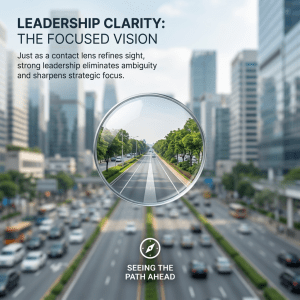
I wear contacts, and there is nothing worse than dealing with that annoying film that builds up on them during the day, especially in the spring when pollen seems to take over everything. When I wake up in the morning, my contacts are clean, having sat all night in solution, ready for the day ahead. But forget to clean them? For those of you who wear contacts, you already know how that feels. Cloudy, uncomfortable, and distracting in a way that is hard to ignore.

There is something almost symbolic about putting in contact lenses each morning. You begin the day with intention, correcting your vision so you can engage the world as it really is, not as a blur of approximations. For educational leaders, that simple routine offers a surprisingly powerful metaphor. Clarity is not automatic. It is maintained through consistent care, thoughtful habits, and awareness of the environment.

Clarity Is Not Accidental

Wearing contacts requires preparation. You do not just wake up and see clearly. You clean the lenses, use the right solution, and handle them carefully. Skip those steps, and discomfort or even damage follows.

Leadership works the same way. Clear vision, knowing your purpose, priorities, and values, does not happen by chance. It comes from deliberate reflection and upkeep:

  • Revisiting your mission
  • Aligning decisions with core values
  • Communicating expectations consistently

Without that kind of reflection and alignment, even the best intentions can become cloudy.

The Role of “Solution” in Leadership

Contact solution is not optional. It keeps lenses usable. It cleans away buildup, disinfects, and restores clarity.

In schools, “solution” looks like:

  • Honest feedback loops
  • Professional learning
  • Time for reflection and recalibration

Leaders who neglect this step often find their organizations drifting. Small issues accumulate. Miscommunication, unclear expectations, and staff fatigue build up until the entire system feels irritating, like a dry lens you tried to ignore for too long.

Spring Pollen: External Forces Matter

Then comes spring. Pollen fills the air, and suddenly your eyes are more sensitive, your lenses less comfortable, and your vision slightly compromised. Even when you have done everything right, the environment still affects you.

Pollen can also represent the environment we lead in. Sometimes we cannot avoid it, but we can be prepared for it. Often, it comes straight to us, bringing challenges, distractions, and pressures we did not invite but still have to manage.

Schools experience their own version of “pollen”:

  • Policy changes
  • Community pressures
  • Testing cycles
  • Seasonal fatigue

Effective leaders do not pretend these factors do not exist. They anticipate them. They adjust expectations, provide support, and recognize that performance dips or tensions may be environmental, not personal.

Adjusting Without Losing Vision

When pollen is high, contact wearers adapt:

  • Using rewetting drops
  • Limiting wear time
  • Switching to glasses when needed

Educational leaders must do the same. Clarity of vision does not mean rigidity in practice. It means staying grounded in purpose while adjusting strategies:

  • Offering flexibility during stressful periods
  • Prioritizing well-being alongside achievement
  • Knowing when to push forward and when to pause

The Discipline of Daily Care

Perhaps the most overlooked lesson is consistency. Clear eyesight is not achieved once. It is maintained daily. Skip a night of proper lens care, and you feel it the next day.

Leadership clarity is no different. It is built through small, repeated actions:

  • Checking in with staff
  • Being visible and present
  • Reinforcing what matters most

These are not grand gestures. They are the everyday habits that keep the organization seeing clearly.

A Deeper Lens

From a Christian perspective, clarity is not just about what we do. It is about how we see. In Ephesians 1:18, Paul writes, “I pray that the eyes of your heart may be enlightened.” True vision goes deeper than what is in front of us. It shapes how we understand, lead, and respond to others.

Like contact lenses, our perspective can become clouded. Not just by busyness or external pressures, but by pride, fear, distraction, or misplaced priorities. Left unattended, these things distort how we lead, how we serve, and how we care for others.

Final Thought

Clear vision in leadership is not just about what you see. It is about how you care for your ability to see. Like contact lenses, it requires attention, maintenance, and adaptation to the environment.

And just like spring pollen reminds us, even the clearest vision can be challenged. The goal is not perfection. It is awareness, responsiveness, and the discipline to keep cleaning the lens.

Because when leaders see clearly, schools move with purpose.

As you step into your role today, remember that you are not just an educator and leader but a shaper of the future. Your actions and decisions profoundly impact the lives of those you guide. Go, be the great educator and leader that our future needs.

Remember… Think Leadership and Be For Others…

©2026 J Clay Norton

Want more Leadership Thoughts? Follow me on… X @thebookchamber or follow the blog directly.

Share this:

  • Tweet
  • Email a link to a friend (Opens in new window) Email
  • More
  • Print (Opens in new window) Print
  • Share on Tumblr
Like Loading...

Where is the Lamb? God will Provide.

02 Thursday Apr 2026

Posted by The Book Chamber in Christian Worldview, Easter, God, Jesus

≈ Leave a comment

Tags

Easter


If you would like to download a printer friendly version of this with the above picture as a washout watermark background, click here: Where is the Lamb? God will provide.

Where is the Lamb? God will provide.

Abraham ascended the holy mountain, obedience measured step by step.

Isaac followed, bearing the wood, bearing the question placed upon every faithful heart…
“Where is the Lamb…?”

Abraham answered, voice steady, heart burning… “God will provide for himself the Lamb… my son.”

Faith spoke before understanding.

The knife was lifted… The knife was stayed… by the word of the Lord.

A ram was revealed, full-grown, strong, its horns caught in the thicket…
power restrained, the horn of salvation held fast.

Not a Lamb. Not a son.

A substitute was appointed, strength offered in another’s place, blood given so the beloved might live.

The altar changed. The promise held. God provided.

Time opened its long obedience. Another mountain waited.

Another Son ascended, wood pressed into His shoulders.
The spoken promise returned and stood fulfilled.

This time, the Lamb was provided.
Not caught. Not spared. No knife was stayed.

No substitute stood nearby.
The Lamb was bound, crowned with thorns, laid in the silence of the earth.

But the story did not end where the stone was set…

The horn of salvation was lifted in victory.
The thicket gave way to a garden tomb…

The grave loosened its hold.  Provision rose. Redemption breathed.

The Lamb lives, for us.

Happy Easter

© J Clay Norton, 2026

For previous Easter thoughts, click the link…

2025 Rejoicing in the Mourning of the Empty Tomb

2024 The Symbol of Love’s Greatest Story

2023 The Walk

2022 The Victory of Christ

2021 Resurrection Morning

2020 The Lamb’s Precious Blood

2019 The Cross I See…

2018  The Cross and The Grave

As you step into your role today, remember that you are not just an educator and leader but a shaper of the future. Your actions and decisions profoundly impact the lives of those you guide. Go, be the great educator and leader that our future needs.

Remember… Think Leadership and Be For Others…

©2026 J Clay Norton

Want more Leadership Thoughts? Follow me on… X @thebookchamber or follow the blog directly.

Share this:

  • Tweet
  • Email a link to a friend (Opens in new window) Email
  • More
  • Print (Opens in new window) Print
  • Share on Tumblr
Like Loading...
← Older posts
Follow The Book Chamber on WordPress.com

Enter your email address to follow this blog and receive notifications of new posts by email.

Follow me on Twitter

My Tweets

Archives

  • October 2026 (1)
  • September 2026 (2)
  • August 2026 (2)
  • May 2026 (2)
  • April 2026 (2)
  • March 2026 (1)
  • February 2026 (2)
  • January 2026 (2)
  • December 2025 (2)
  • November 2025 (2)
  • October 2025 (3)
  • September 2025 (2)
  • August 2025 (1)
  • June 2025 (1)
  • May 2025 (4)
  • April 2025 (4)
  • March 2025 (2)
  • February 2025 (4)
  • January 2025 (4)
  • December 2024 (4)
  • November 2024 (4)
  • October 2024 (2)
  • September 2024 (4)
  • August 2024 (4)
  • May 2024 (2)
  • April 2024 (4)
  • March 2024 (3)
  • February 2024 (4)
  • January 2024 (3)
  • December 2023 (4)
  • November 2023 (3)
  • October 2023 (3)
  • September 2023 (4)
  • August 2023 (4)
  • July 2023 (1)
  • May 2023 (3)
  • April 2023 (4)
  • March 2023 (4)
  • February 2023 (4)
  • January 2023 (3)
  • December 2022 (4)
  • November 2022 (3)
  • October 2022 (4)
  • September 2022 (5)
  • August 2022 (3)
  • May 2022 (4)
  • April 2022 (5)
  • March 2022 (3)
  • February 2022 (4)
  • January 2022 (4)
  • December 2021 (3)
  • November 2021 (3)
  • October 2021 (5)
  • September 2021 (4)
  • August 2021 (3)
  • May 2021 (3)
  • April 2021 (5)
  • March 2021 (3)
  • February 2021 (3)
  • January 2021 (4)
  • December 2020 (3)
  • November 2020 (3)
  • October 2020 (5)
  • September 2020 (4)
  • August 2020 (2)
  • June 2020 (1)
  • May 2020 (3)
  • April 2020 (4)
  • March 2020 (1)
  • February 2020 (4)
  • January 2020 (4)
  • December 2019 (3)
  • November 2019 (4)
  • October 2019 (4)
  • September 2019 (4)
  • August 2019 (3)
  • July 2019 (1)
  • June 2019 (1)
  • May 2019 (3)
  • April 2019 (4)
  • March 2019 (4)
  • February 2019 (4)
  • January 2019 (3)
  • December 2018 (3)
  • November 2018 (4)
  • October 2018 (4)
  • September 2018 (4)
  • August 2018 (4)
  • July 2018 (1)
  • June 2018 (1)
  • May 2018 (4)
  • April 2018 (4)
  • March 2018 (4)
  • February 2018 (4)
  • January 2018 (3)
  • December 2017 (4)
  • November 2017 (3)
  • October 2017 (4)
  • September 2017 (5)
  • August 2017 (3)
  • July 2017 (1)
  • June 2017 (4)
  • May 2017 (19)
  • April 2017 (9)

Categories

  • A Christmas Story
  • Accountability
  • Achieve
  • Achievement Gap
  • ACME Math Guys
  • Acquaintance
  • Actions
  • Adaptability
  • Advantage
  • Adventure
  • Adversity
  • Advice
  • Advocate
  • Affection
  • Agenda
  • Align
  • Amazing
  • Amnesia
  • Anchored
  • Andy Griffith
  • Annoying
  • Appreciation
  • Assist
  • Attention
  • Attitude
  • Audience Face
  • Authentic
  • Balance
  • Banning Books
  • Bitterness
  • Boundaries
  • Brand
  • Camaraderie
  • Captive
  • Change
  • Character
  • Charlie Brown
  • Choice
  • Christian Worldview
  • Christmas
  • Christmas Vacation
  • Circumstances
  • Clarity
  • Classroom Leadership
  • Classroom Management
  • Clear
  • Comfort Zone
  • Commitment
  • Communication
  • Company
  • Compassion
  • Complacency
  • confidence
  • Conflict
  • Connections
  • Conscience
  • Consistency
  • Contentment
  • Context
  • Conversations
  • Conviction
  • Core Values
  • coronavirus
  • Counseling
  • Courage
  • COVID-19
  • covid19
  • Craft
  • Crisis
  • Culture
  • Decay
  • Deciding
  • Decisions
  • Decline
  • Description
  • Desire
  • Detox
  • Dignity
  • Diplomacy
  • Disaster
  • Distance
  • Distance Learning
  • Distractions
  • Dr. Seuss
  • Drama
  • Drift
  • Easter
  • Echo Chamber
  • Education
  • Educational Leadership
  • Effective
  • Embrace
  • Emotion
  • Emotional Temperature
  • Empathy
  • Empower
  • Encouragement
  • Engagement
  • Entertainment
  • Essence
  • Exercise
  • Expectations
  • Experience
  • Expertise
  • Expiration dates
  • Facade
  • Fair and Equitable Education
  • Family
  • Feedback
  • Focus
  • Foundation
  • Freedom
  • Friendship
  • Funding
  • Future
  • Gift
  • Giving
  • God
  • Grace
  • Grading
  • Gratitude
  • Gravitas
  • Grit
  • Growth
  • Heart
  • Heroes
  • History
  • Honest
  • Hope
  • Hope Stealer
  • Humility
  • Idealist
  • Ideals
  • Idioms
  • Illusions
  • Image
  • Importance
  • Influence
  • Insecurity
  • Inspiration
  • Integrity
  • Intensity
  • Intentional
  • Intentions
  • Intolerance
  • Issues
  • It's a Wonderful Life
  • Jesus
  • Joy
  • Kindness
  • Know Your Why
  • Knowledge
  • Leader
  • Leadership
  • Learning
  • Legacy
  • Legislators
  • Lesson Plans
  • Light
  • Listening
  • Looney Tunes
  • Love
  • Loyalty
  • Mandates
  • Manipulation
  • Mask
  • Math
  • Maturity
  • Meetings
  • Memories
  • Mercy
  • Message
  • Misery
  • Mission
  • Mixed Signals
  • Momentum
  • Motivation
  • Narcissism
  • NERDLE
  • New School Year
  • Obedience
  • Observation
  • Opinions
  • Opportunity
  • Passion
  • Passive-Agressive
  • Patience
  • Peculiar
  • Perception
  • Perceptions
  • Perseverance
  • Perspective
  • Pet Peeves
  • Pitfalls
  • Power
  • Preferences
  • Preparation
  • Presence
  • Present
  • Pressure
  • Pride
  • Professionalism
  • Promotion
  • Public Schools
  • Purpose
  • Reading
  • Reality
  • Reflection
  • Relationships
  • Remember
  • Resilience
  • Respect
  • Responsibility
  • Rest
  • Sacrifice
  • School Choice
  • school consolidation
  • School Supplies
  • Sensitive
  • Servant
  • Shadows
  • Sincerity
  • Sinkholes
  • Smile
  • Spring Break
  • Standard
  • Star Wars
  • Students
  • Teacher Appreciation
  • Teacher Shortage
  • Teachers
  • Team
  • Technology
  • Tension
  • Testing
  • Thankful
  • Thanksgiving
  • The Masters
  • Time
  • Tolerance
  • Transactional
  • Transfer Portal
  • Transformational
  • Transitive Power
  • Transparent
  • Tribute
  • Trust
  • Truth
  • Uncategorized
  • Understanding
  • Unity
  • Useful
  • Value
  • Vision
  • Vouchers
  • Whole
  • Wisdom
  • Word
  • WORDLE

Blog Stats

  • 56,890 hits

Blog at WordPress.com.

  • Subscribe Subscribed
    The Book Chamber
    Join 183 other subscribers

    Have a WordPress.com account? Log in now.

  • The Book Chamber
    View site in Reader
    Manage subscriptionsSign upLog in
    Report this content
    Collapse this bar
Loading Comments...
%d