• Home
  • About
  • Contact

The Book Chamber

~ J Clay Norton, Ed.D.

The Book Chamber

Category Archives: Classroom Leadership

Have We Forgotten What Good Leadership Feels Like?

02 Friday Oct 2026

Posted by The Book Chamber in Actions, Choice, Classroom Leadership, Core Values, Education, Educational Leadership, Emotion, Emotional Temperature, Influence, Leader, Leadership, Loyalty, Momentum, Motivation, Relationships, Respect, Responsibility, Truth, Wisdom

≈ Leave a comment

Tags

business, Education, Educational Leadership, Leader, Leadership, Learning, Respect, school, Teachers, teaching

Most educators want to work around good leadership. Why would we not? We want leaders who communicate clearly, make thoughtful decisions, support their people, and remain focused on what is best for students. We want to be part of an organization where leadership strengthens us rather than drains us.

This idea came to me, once again, while reading Sinclair Ferguson’s book, Things Unseen: One Year of Reflections on the Christian Life. In one of the devotionals, Ferguson writes about the importance of hearing good preaching and maintaining a desire to be around it. After reading that particular devotional, I thought, Yes, and could the same not be said about leadership?

So…

There is nothing wrong with wanting good leadership. In fact, good leadership is essential to the health of a school, district, university, or any other educational organization, or any organization, for that matter. However, I sometimes wonder whether we give as much attention to how we respond to leadership as we give to the quality of the leadership we receive.

We are often quick to evaluate our leaders. We examine their decisions, question their communication, and notice the areas in which they fall short. Some of that evaluation is necessary. Educational leaders should be held accountable, and poor leadership should never be excused simply because someone holds a position of authority.

At the same time, leadership is not experienced in a vacuum. Certainly, there are leaders who can suck the air out of a room, but the attitudes of those being led also matter. We can become so accustomed to analyzing everything a leader says or does that we stop genuinely listening. We hear the words, but we do not take them in. We attend the meeting, read the email, and sit through the professional development, yet we remain detached from the message. Instead of asking what we can learn or how we can contribute, we immediately begin identifying what is wrong.

There is an important difference between discernment and cynicism.

Discernment helps us recognize what is effective, what needs improvement, and how we can move forward. Cynicism assumes that nothing worthwhile is coming. Once cynicism settles into an organization, even good leadership can become difficult to recognize. People may become so accustomed to weak, inconsistent, or self-serving leadership that they gradually lower their expectations. Eventually, they begin to say, “It is what it is,” and that may be one of the most dangerous statements in educational leadership.

When people accept ineffective leadership as normal, they stop expecting clarity. They stop asking for meaningful direction. They learn to survive without encouragement, collaboration, or a shared sense of purpose. They find ways to accomplish their work in isolation, depending on a few trusted colleagues rather than the larger organization. Over time, their appetite for good leadership begins to disappear because they have forgotten what healthy leadership feels like.

Then they encounter a truly effective leader.

They meet someone who listens before speaking, communicates with honesty, and makes decisions based on mission rather than ego. They see a leader who provides both support and accountability, recognizes the value of others, and is willing to make difficult decisions without losing compassion. Suddenly, they realize how long they have been functioning without the leadership they needed. It is almost as if dead skin begins falling away and they are finally able to breathe again.

Good leadership has a way of reminding people what leadership is supposed to be.

It creates an environment where people want to grow. It does not demand loyalty through fear or position; it earns trust through consistency, humility, competence, and care. People want to be around that kind of leadership because it brings out something better in them. They think more deeply, collaborate more freely, and become more willing to take responsible risks. They are not merely completing tasks. They begin to see how their work connects to a purpose larger than themselves.

However, being around good leadership also brings responsibility. We cannot expect leaders to communicate while refusing to listen. We cannot ask them to invite collaboration while remaining unwilling to participate. We cannot request honest feedback and then become defensive when it is offered. If good leadership is going to nourish an organization, the people within that organization must be willing to receive it, reflect on it, and respond to it.

This does not mean that followers should agree with every decision or remain silent when concerns arise. Healthy organizations need thoughtful questions, respectful disagreement, and honest feedback. Good leaders should welcome those things. But there is a difference between constructive engagement and constant resistance. One helps an organization improve; the other slowly weakens its capacity to move forward.

Perhaps all of us need to ask two questions.

First, what kind of leadership am I providing?

Am I offering the people around me clarity, encouragement, direction, and meaningful opportunities to grow? Do my words and actions strengthen the organization, or are the people I lead forced to find what they need somewhere else?

Second, what kind of follower am I being?

Am I listening with the intention of understanding? Am I willing to receive correction, consider another perspective, and contribute to the direction of the organization? Or have I become so detached that I automatically dismiss what I hear?

Educational organizations need good leadership, but they also need people who recognize it, receive it, and respond to it. The longer we remain around healthy leadership, the more our understanding of leadership should deepen. We should develop a stronger desire for integrity, clarity, service, accountability, and purpose, not only from those who lead us, but also within ourselves.

Ultimately, we should want to be around good leadership because good leadership helps us become better educators, better colleagues, and better leaders. It restores our belief in what an organization can become when people are valued, the mission remains central, and leadership is exercised for the good of others.

But perhaps the greatest evidence that we have truly experienced good leadership is not simply that we enjoyed being around it.

It is that, because of it, we learned how to lead others better. And… if you asking what does good leadership look like? Look to Jesus.

As you step into your role today, remember that you are not just an educator and leader but a shaper of the future. Your actions and decisions profoundly impact the lives of those you guide. Go, be the great educator and leader that our future needs.

Remember… Think Leadership and Be For Others…

©2026 J Clay Norton

Want more Leadership Thoughts? Follow me on… X @thebookchamber or on FaceBook at J Clay Norton or follow the blog directly.

Share this:

  • Tweet
  • Email a link to a friend (Opens in new window) Email
  • More
  • Print (Opens in new window) Print
  • Share on Tumblr
Like Loading...

The Long Game of Teaching: A Teacher Appreciation

01 Friday May 2026

Posted by The Book Chamber in Accountability, Advocate, Appreciation, Classroom Leadership, Education, Educational Leadership, Effective, Encouragement, Leader, Leadership, Respect, Responsibility, Teacher Appreciation, Teachers, Thankful

≈ Leave a comment

Tags

Education, Educational Leadership, Leader, Leadership, Learning, Respect, school, Teachers, teaching

Recently, the Stennis-Montgomery Institute for Public Policy and Administration at Mississippi State University held its 50th anniversary. During the evening, many accolades and comments were shared and given by those in attendance. Most importantly was the keynote speaker (that’s what I’m calling him anyway)… Dr. Dallas Breen, Executive Director. During the final part of his speech, he spoke about the Institute’s legacy, serving the public good, and looking ahead to the next stages. In summary, Dr. Breen spoke on three specific thoughts: 1) Public service is a long game, 2) Partnerships are our greatest asset, and 3) The next fifty years matter even more than the first.

Personal side story… Dallas and I have become good friends over the past five years, beginning when my daughter, Breana, started working with the Institute (and he is still been a valuable mentor to her), and the fact that he actually reads my leadership blogs. So, after the event, we spoke. I told him I needed the last three pages of his speech because I was going to turn what he said into a teacher appreciation blog for Teacher Appreciation Week, which starts next week, by the way. So, with a nod of gratitude to Dr. Breen, here is that message reframed as a charge for us, educators…

Good education begins with good information and an unwavering commitment to serving others.

So before anything else, pause.

Pause to reflect on the teacher who challenged you.

Pause to remember the one who believed in you when you did not believe in yourself.

Pause to appreciate the countless educators who show up every day with purpose.

Because teaching, like public service, is a long game.

Looking Ahead While Honoring the Work

As we celebrate Teacher Appreciation Week, it is not just about looking back. It is about recognizing what lies ahead. There are three truths worth holding onto.

First: Teaching is a long game.

The most meaningful impact does not show up immediately. It unfolds over years, sometimes decades, in the lives of students who carry lessons far beyond the classroom. Great educators understand that their success is not measured in test scores alone, but in the character, curiosity, and resilience they help build over time.

Second: Relationships are the real curriculum.

The best learning happens through connection. Teachers partner not only with students, but with families, colleagues, and communities. They listen, adapt, and meet people where they are. These relationships are what turn information into transformation, and these partnerships are our greatest asset.

Third: The future depends on today’s classrooms.

The challenges facing our world are complex and evolving. But teachers remain uniquely positioned to prepare the next generation to meet them, equipped with knowledge, empathy, and critical thinking. The work happening in classrooms today will shape the next fifty years in ways we are only beginning to understand.

Honoring the Legacy, Investing in What’s Next

This week, we honor the educators who came before, the ones who built strong foundations. We celebrate those in classrooms today, the ones doing the daily, often unseen work, and we look ahead to those who will carry this calling forward. The commitment to education has never changed. What has grown is its reach, its depth, and its impact.

To every teacher, thank you.

Thank you for your patience.

Thank you for your persistence.

Thank you for the countless ways you make a difference, often without recognition.

You are part of a legacy that shapes lives, strengthens communities, and builds the future. Here is to you, and to the lasting impact of your work.

As you step into your role today, remember that you are not just an educator and leader but a shaper of the future. Your actions and decisions profoundly impact the lives of those you guide. Go, be the great educator and leader that our future needs.

Remember… Think Leadership and Be For Others…

©2026 J Clay Norton

Want more Leadership Thoughts? Follow me on… X @thebookchamber or follow the blog directly.

Share this:

  • Tweet
  • Email a link to a friend (Opens in new window) Email
  • More
  • Print (Opens in new window) Print
  • Share on Tumblr
Like Loading...

Seeing Clearly: What Contacts, Care, and Spring Pollen Teach Us About Educational Leadership

17 Friday Apr 2026

Posted by The Book Chamber in Actions, Christian Worldview, Clarity, Classroom Leadership, Clear, Consistency, Educational Leadership, Effective, Intentional, Leader, Leadership, Purpose, Vision

≈ Leave a comment

Tags

Education, Educational Leadership, Leader, Leadership, Learning, Respect, school, Teachers, teaching

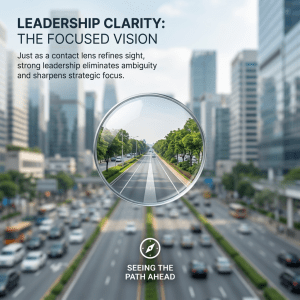
I wear contacts, and there is nothing worse than dealing with that annoying film that builds up on them during the day, especially in the spring when pollen seems to take over everything. When I wake up in the morning, my contacts are clean, having sat all night in solution, ready for the day ahead. But forget to clean them? For those of you who wear contacts, you already know how that feels. Cloudy, uncomfortable, and distracting in a way that is hard to ignore.

There is something almost symbolic about putting in contact lenses each morning. You begin the day with intention, correcting your vision so you can engage the world as it really is, not as a blur of approximations. For educational leaders, that simple routine offers a surprisingly powerful metaphor. Clarity is not automatic. It is maintained through consistent care, thoughtful habits, and awareness of the environment.

Clarity Is Not Accidental

Wearing contacts requires preparation. You do not just wake up and see clearly. You clean the lenses, use the right solution, and handle them carefully. Skip those steps, and discomfort or even damage follows.

Leadership works the same way. Clear vision, knowing your purpose, priorities, and values, does not happen by chance. It comes from deliberate reflection and upkeep:

  • Revisiting your mission
  • Aligning decisions with core values
  • Communicating expectations consistently

Without that kind of reflection and alignment, even the best intentions can become cloudy.

The Role of “Solution” in Leadership

Contact solution is not optional. It keeps lenses usable. It cleans away buildup, disinfects, and restores clarity.

In schools, “solution” looks like:

  • Honest feedback loops
  • Professional learning
  • Time for reflection and recalibration

Leaders who neglect this step often find their organizations drifting. Small issues accumulate. Miscommunication, unclear expectations, and staff fatigue build up until the entire system feels irritating, like a dry lens you tried to ignore for too long.

Spring Pollen: External Forces Matter

Then comes spring. Pollen fills the air, and suddenly your eyes are more sensitive, your lenses less comfortable, and your vision slightly compromised. Even when you have done everything right, the environment still affects you.

Pollen can also represent the environment we lead in. Sometimes we cannot avoid it, but we can be prepared for it. Often, it comes straight to us, bringing challenges, distractions, and pressures we did not invite but still have to manage.

Schools experience their own version of “pollen”:

  • Policy changes
  • Community pressures
  • Testing cycles
  • Seasonal fatigue

Effective leaders do not pretend these factors do not exist. They anticipate them. They adjust expectations, provide support, and recognize that performance dips or tensions may be environmental, not personal.

Adjusting Without Losing Vision

When pollen is high, contact wearers adapt:

  • Using rewetting drops
  • Limiting wear time
  • Switching to glasses when needed

Educational leaders must do the same. Clarity of vision does not mean rigidity in practice. It means staying grounded in purpose while adjusting strategies:

  • Offering flexibility during stressful periods
  • Prioritizing well-being alongside achievement
  • Knowing when to push forward and when to pause

The Discipline of Daily Care

Perhaps the most overlooked lesson is consistency. Clear eyesight is not achieved once. It is maintained daily. Skip a night of proper lens care, and you feel it the next day.

Leadership clarity is no different. It is built through small, repeated actions:

  • Checking in with staff
  • Being visible and present
  • Reinforcing what matters most

These are not grand gestures. They are the everyday habits that keep the organization seeing clearly.

A Deeper Lens

From a Christian perspective, clarity is not just about what we do. It is about how we see. In Ephesians 1:18, Paul writes, “I pray that the eyes of your heart may be enlightened.” True vision goes deeper than what is in front of us. It shapes how we understand, lead, and respond to others.

Like contact lenses, our perspective can become clouded. Not just by busyness or external pressures, but by pride, fear, distraction, or misplaced priorities. Left unattended, these things distort how we lead, how we serve, and how we care for others.

Final Thought

Clear vision in leadership is not just about what you see. It is about how you care for your ability to see. Like contact lenses, it requires attention, maintenance, and adaptation to the environment.

And just like spring pollen reminds us, even the clearest vision can be challenged. The goal is not perfection. It is awareness, responsiveness, and the discipline to keep cleaning the lens.

Because when leaders see clearly, schools move with purpose.

As you step into your role today, remember that you are not just an educator and leader but a shaper of the future. Your actions and decisions profoundly impact the lives of those you guide. Go, be the great educator and leader that our future needs.

Remember… Think Leadership and Be For Others…

©2026 J Clay Norton

Want more Leadership Thoughts? Follow me on… X @thebookchamber or follow the blog directly.

Share this:

  • Tweet
  • Email a link to a friend (Opens in new window) Email
  • More
  • Print (Opens in new window) Print
  • Share on Tumblr
Like Loading...

Recovering the Lost Art of Diplomacy in Educational Leadership…

20 Friday Mar 2026

Posted by The Book Chamber in Classroom Leadership, Conversations, Diplomacy, Education, Educational Leadership, Expectations, Experience, Leader, Leadership, Perception, Perspective, Reflection, Respect, Responsibility, Trust

≈ Leave a comment

Tags

business, Education, Educational Leadership, Leader, Leadership, Learning, Respect, school, Teachers, teaching

Recently I came across a piece from Hillsdale College’s Imprimis titled Recovering the Lost Art of Diplomacy. The article reflects on how diplomacy, once considered an essential leadership skill, has gradually given way to something very different. Instead of patience, listening, and relationship-building, we often see speed, reaction, and public positioning. Reading it made me think about how that same shift is playing out in education. So as you can see, I have been a little creative with the title of this blog, calling it Recovering the Lost Art of Diplomacy in Educational Leadership.

Educational leadership has always required diplomacy.

Schools sit at the intersection of community expectations, political realities, family priorities, and student needs. Too often, it feels like a busy intersection where no one is stopping or yielding. Everyone just keeps barreling through. Navigating those intersections well requires more than technical knowledge or managerial skill. It requires the ability to listen carefully, speak thoughtfully, and bring people together around shared goals, even when they approach issues from very different perspectives.

At its best, diplomacy in educational leadership is quiet work. It happens in conversations before meetings begin. It happens in the effort to understand the concern behind someone’s frustration. It happens when leaders slow down long enough to seek common ground rather than rushing to prove a point.

Increasingly, however, diplomacy seems to be losing ground.

The pace of communication today rewards immediacy over reflection. Social media encourages quick reactions rather than thoughtful dialogue. Public discourse often values strong statements more than careful listening. In that environment, the skills that once defined effective leadership, patience, discretion, and bridge-building, can begin to feel outdated.

But they are not outdated. They are essential.

In fact, the more complex our educational landscape becomes, the more important diplomacy becomes as well. Schools today face challenges that cannot be solved by one voice or one perspective alone. They require collaboration among educators, families, policymakers, and communities. That kind of collaboration does not happen by accident. It requires leaders who are willing to build trust slowly and intentionally.

Diplomacy does not mean avoiding difficult conversations. Quite the opposite. It means engaging those conversations with respect, humility, and a genuine willingness to understand others. It means recognizing that disagreement does not have to lead to division. In many cases, it can lead to stronger solutions.

For educational leaders, recovering the lost art of diplomacy may be one of the most important responsibilities we carry. Our schools are places where young people learn not only academics, but also how communities work together. The way we lead models the way collaboration, disagreement, and progress should look.

Leadership in education will always require courage, clarity, and conviction. But it also requires something quieter and just as powerful. It requires the ability to bring people together around a shared purpose.

Perhaps now more than ever, our schools need leaders who understand that progress is rarely achieved by winning arguments. It is achieved by building trust, finding common ground, and doing the patient work of moving people forward together. In many ways, recovering the lost art of diplomacy may be one of the most important lessons educational leadership can offer our communities today.

As you step into your role today, remember that you are not just an educator and leader but a shaper of the future. Your actions and decisions profoundly impact the lives of those you guide. Go, be the great educator and leader that our future needs.

Remember… Think Leadership and Be For Others…

©2026 J Clay Norton

Want more Leadership Thoughts? Follow me on… X @thebookchamber or follow the blog directly.

Want to share this leadership thought with others? Click on one of the social media sharing buttons below and help spread the good…

Share this:

  • Tweet
  • Email a link to a friend (Opens in new window) Email
  • More
  • Print (Opens in new window) Print
  • Share on Tumblr
Like Loading...
← Older posts
Follow The Book Chamber on WordPress.com

Enter your email address to follow this blog and receive notifications of new posts by email.

Follow me on Twitter

My Tweets

Archives

  • October 2026 (1)
  • September 2026 (2)
  • August 2026 (2)
  • May 2026 (2)
  • April 2026 (2)
  • March 2026 (1)
  • February 2026 (2)
  • January 2026 (2)
  • December 2025 (2)
  • November 2025 (2)
  • October 2025 (3)
  • September 2025 (2)
  • August 2025 (1)
  • June 2025 (1)
  • May 2025 (4)
  • April 2025 (4)
  • March 2025 (2)
  • February 2025 (4)
  • January 2025 (4)
  • December 2024 (4)
  • November 2024 (4)
  • October 2024 (2)
  • September 2024 (4)
  • August 2024 (4)
  • May 2024 (2)
  • April 2024 (4)
  • March 2024 (3)
  • February 2024 (4)
  • January 2024 (3)
  • December 2023 (4)
  • November 2023 (3)
  • October 2023 (3)
  • September 2023 (4)
  • August 2023 (4)
  • July 2023 (1)
  • May 2023 (3)
  • April 2023 (4)
  • March 2023 (4)
  • February 2023 (4)
  • January 2023 (3)
  • December 2022 (4)
  • November 2022 (3)
  • October 2022 (4)
  • September 2022 (5)
  • August 2022 (3)
  • May 2022 (4)
  • April 2022 (5)
  • March 2022 (3)
  • February 2022 (4)
  • January 2022 (4)
  • December 2021 (3)
  • November 2021 (3)
  • October 2021 (5)
  • September 2021 (4)
  • August 2021 (3)
  • May 2021 (3)
  • April 2021 (5)
  • March 2021 (3)
  • February 2021 (3)
  • January 2021 (4)
  • December 2020 (3)
  • November 2020 (3)
  • October 2020 (5)
  • September 2020 (4)
  • August 2020 (2)
  • June 2020 (1)
  • May 2020 (3)
  • April 2020 (4)
  • March 2020 (1)
  • February 2020 (4)
  • January 2020 (4)
  • December 2019 (3)
  • November 2019 (4)
  • October 2019 (4)
  • September 2019 (4)
  • August 2019 (3)
  • July 2019 (1)
  • June 2019 (1)
  • May 2019 (3)
  • April 2019 (4)
  • March 2019 (4)
  • February 2019 (4)
  • January 2019 (3)
  • December 2018 (3)
  • November 2018 (4)
  • October 2018 (4)
  • September 2018 (4)
  • August 2018 (4)
  • July 2018 (1)
  • June 2018 (1)
  • May 2018 (4)
  • April 2018 (4)
  • March 2018 (4)
  • February 2018 (4)
  • January 2018 (3)
  • December 2017 (4)
  • November 2017 (3)
  • October 2017 (4)
  • September 2017 (5)
  • August 2017 (3)
  • July 2017 (1)
  • June 2017 (4)
  • May 2017 (19)
  • April 2017 (9)

Categories

  • A Christmas Story
  • Accountability
  • Achieve
  • Achievement Gap
  • ACME Math Guys
  • Acquaintance
  • Actions
  • Adaptability
  • Advantage
  • Adventure
  • Adversity
  • Advice
  • Advocate
  • Affection
  • Agenda
  • Align
  • Amazing
  • Amnesia
  • Anchored
  • Andy Griffith
  • Annoying
  • Appreciation
  • Assist
  • Attention
  • Attitude
  • Audience Face
  • Authentic
  • Balance
  • Banning Books
  • Bitterness
  • Boundaries
  • Brand
  • Camaraderie
  • Captive
  • Change
  • Character
  • Charlie Brown
  • Choice
  • Christian Worldview
  • Christmas
  • Christmas Vacation
  • Circumstances
  • Clarity
  • Classroom Leadership
  • Classroom Management
  • Clear
  • Comfort Zone
  • Commitment
  • Communication
  • Company
  • Compassion
  • Complacency
  • confidence
  • Conflict
  • Connections
  • Conscience
  • Consistency
  • Contentment
  • Context
  • Conversations
  • Conviction
  • Core Values
  • coronavirus
  • Counseling
  • Courage
  • COVID-19
  • covid19
  • Craft
  • Crisis
  • Culture
  • Decay
  • Deciding
  • Decisions
  • Decline
  • Description
  • Desire
  • Detox
  • Dignity
  • Diplomacy
  • Disaster
  • Distance
  • Distance Learning
  • Distractions
  • Dr. Seuss
  • Drama
  • Drift
  • Easter
  • Echo Chamber
  • Education
  • Educational Leadership
  • Effective
  • Embrace
  • Emotion
  • Emotional Temperature
  • Empathy
  • Empower
  • Encouragement
  • Engagement
  • Entertainment
  • Essence
  • Exercise
  • Expectations
  • Experience
  • Expertise
  • Expiration dates
  • Facade
  • Fair and Equitable Education
  • Family
  • Feedback
  • Focus
  • Foundation
  • Freedom
  • Friendship
  • Funding
  • Future
  • Gift
  • Giving
  • God
  • Grace
  • Grading
  • Gratitude
  • Gravitas
  • Grit
  • Growth
  • Heart
  • Heroes
  • History
  • Honest
  • Hope
  • Hope Stealer
  • Humility
  • Idealist
  • Ideals
  • Idioms
  • Illusions
  • Image
  • Importance
  • Influence
  • Insecurity
  • Inspiration
  • Integrity
  • Intensity
  • Intentional
  • Intentions
  • Intolerance
  • Issues
  • It's a Wonderful Life
  • Jesus
  • Joy
  • Kindness
  • Know Your Why
  • Knowledge
  • Leader
  • Leadership
  • Learning
  • Legacy
  • Legislators
  • Lesson Plans
  • Light
  • Listening
  • Looney Tunes
  • Love
  • Loyalty
  • Mandates
  • Manipulation
  • Mask
  • Math
  • Maturity
  • Meetings
  • Memories
  • Mercy
  • Message
  • Misery
  • Mission
  • Mixed Signals
  • Momentum
  • Motivation
  • Narcissism
  • NERDLE
  • New School Year
  • Obedience
  • Observation
  • Opinions
  • Opportunity
  • Passion
  • Passive-Agressive
  • Patience
  • Peculiar
  • Perception
  • Perceptions
  • Perseverance
  • Perspective
  • Pet Peeves
  • Pitfalls
  • Power
  • Preferences
  • Preparation
  • Presence
  • Present
  • Pressure
  • Pride
  • Professionalism
  • Promotion
  • Public Schools
  • Purpose
  • Reading
  • Reality
  • Reflection
  • Relationships
  • Remember
  • Resilience
  • Respect
  • Responsibility
  • Rest
  • Sacrifice
  • School Choice
  • school consolidation
  • School Supplies
  • Sensitive
  • Servant
  • Shadows
  • Sincerity
  • Sinkholes
  • Smile
  • Spring Break
  • Standard
  • Star Wars
  • Students
  • Teacher Appreciation
  • Teacher Shortage
  • Teachers
  • Team
  • Technology
  • Tension
  • Testing
  • Thankful
  • Thanksgiving
  • The Masters
  • Time
  • Tolerance
  • Transactional
  • Transfer Portal
  • Transformational
  • Transitive Power
  • Transparent
  • Tribute
  • Trust
  • Truth
  • Uncategorized
  • Understanding
  • Unity
  • Useful
  • Value
  • Vision
  • Vouchers
  • Whole
  • Wisdom
  • Word
  • WORDLE

Blog Stats

  • 56,930 hits

Blog at WordPress.com.

  • Subscribe Subscribed
    The Book Chamber
    Join 183 other subscribers

    Have a WordPress.com account? Log in now.

  • The Book Chamber
    View site in Reader
    Manage subscriptionsSign upLog in
    Report this content
    Collapse this bar
Loading Comments...
%d