
• Home
  • About
  • Contact

The Book Chamber

~ J Clay Norton, Ed.D.

The Book Chamber

Category Archives: Perception

What an “A” Should Make Us Rethink – What Clinton’s schools can teach us about achievement, community, and our own assumptions…

30 Friday Oct 2026

Posted by The Book Chamber in Accountability, Achieve, Classroom Leadership, Commitment, Consistency, Context, Conviction, Core Values, Culture, Decisions, Education, Educational Leadership, Effective, Encouragement, Engagement, Expectations, Focus, Foundation, Importance, Influence, Leader, Leadership, Perception, Perseverance, Public Schools, Purpose, Resilience, Respect, Responsibility, Sacrifice, Teacher Appreciation, Teachers, Value

≈ Leave a comment

Tags

Education, Educational Leadership, Leader, Leadership, Learning, Respect, school, Teachers

I have spent more than 30 years in education, and I know what it means to the people in a school district when their work receives recognition. Teachers spend their days helping students understand something they could not understand yesterday. Administrators work to support their teachers and make decisions that serve their schools. Families want to know their children are learning and being given opportunities to succeed. When a district earns an A, those people have good reason to be proud.

My interest in Clinton is personal. I spent my last 18 years in public education in the Clinton Public School District, so I bring that experience to my reading of these results.
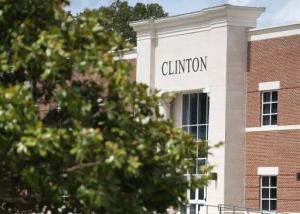
Every year when Mississippi’s accountability results are released, I spend time taking a deep dive into them. I enjoy looking at the particulars and sorting the results by the different criteria in the accountability model. That closer look helps me understand how districts arrive at their grades and what stands out in their performance. This year, Clinton’s results again gave me good reason to pay attention.

The report lists 31 A-rated entries, including Forrest County Agricultural High School, which serves only grades 9–12. For the comparisons in this article, I have excluded Forrest County Agricultural High School because its results represent a narrower range of grade levels. The comparisons therefore include the 30 remaining A-rated school districts.

I also recognize that comparing districts is not always an apples-to-apples exercise. The same letter grade does not mean districts serve identical populations, have equivalent resources, or face the same responsibilities. Mississippi’s accountability system considers proficiency, student growth, graduation, and other measures of readiness, so I look beyond the A to understand the results behind it.

Clinton’s record of achievement reaches further back than the last five accountability releases. The district earned recognition under earlier systems that used classifications such as High Performing and Star District, and its strong record continued as Mississippi moved to letter grades. Although the assessments, calculations, and standards for earning those ratings have changed, Clinton has demonstrated sustained achievement across those changes.

What catches my attention about Clinton is the combination of its sustained achievement and the work taking place across its schools. The district finished second statewide this year and has placed among Mississippi’s top five districts in every accountability release from 2022 through 2026. I believe that record deserves to carry more weight than assumptions people may hold about the district or the community it serves.

Clinton’s teachers, school leaders, students, and families have earned credit for sustaining that achievement year after year. Its mathematics and elementary results give me specific reasons to look more closely at the instruction students receive. I believe there is value in understanding how that work connects across classrooms, grade levels, and schools.

Among those 30 districts, Clinton had the highest mathematics proficiency at 80.1% and the highest mathematics growth at 85.5%. As someone who began his career teaching mathematics, I am fascinated by the pedagogy behind those results. I believe others need to understand how teachers build students’ knowledge, how instruction connects from one grade to the next, and how school leaders support that work.

Clinton’s elementary schools provide a good place to begin looking. In the 2026 assessment results, Eastside’s fourth-grade English language arts and fifth-grade mathematics results ranked first statewide. Those accomplishments give me something specific to consider when examining the quality of instruction in the district’s elementary classrooms.

Community income is also part of understanding the circumstances in which schools operate. My comparison of the Census Bureau’s latest five-year household income estimates, released in 2026 and covering 2020 through 2024, places Clinton toward the upper end of the A-rated districts examined. Those estimates include households without children attending public schools and do not describe every student’s circumstances. I believe that context belongs alongside a closer examination of the instruction, expectations, and support students receive.

An A rating makes Clinton an appealing place for families considering a move to the area or a change in schools. Those conversations often focus on the district’s results without giving much attention to the responsibility of serving students who arrive at different points in their education. Clinton’s teachers serve students who have been in the district since their earliest school years alongside students who began their education elsewhere. Building on the foundation of one group while understanding and responding to the preparation of another requires work that deserves recognition.

That responsibility is part of why I have often wondered about a student who did not begin in Clinton’s pre-K program. By what grade would that student need to enter Clinton’s schools to develop the foundation reflected in these results? I think of that as becoming “Clintonized,” or coming to understand the Clinton way of learning and the expectations that go with it. I am interested in how students come to understand what their teachers expect, how they approach their schoolwork, and how the instruction they receive in one grade prepares them for the next.

How does the experience of a student who enters in third grade compare with that of a student who has attended Clinton’s schools since pre-K? What about a student who arrives in middle school with a different educational background or gaps in what that student has been taught? Students bring knowledge, abilities, and experiences of their own, and the school they previously attended does not tell the whole story of their preparation. I believe there is value in understanding how Clinton’s teachers identify what those students know, provide the support they need, and help them work toward the expectations established for their classmates.

Following students over time would make a fascinating longitudinal study, particularly if it considered their achievement when they entered, the support they received, and their progress during their years in Clinton. The district’s overall results cannot tell me how students who transfer into Clinton perform as a group or how long they need to develop that foundation. Examining those experiences could help identify the instructional practices and support that help students succeed, regardless of when they enter the district.

Those questions come from an appreciation for what Clinton is accomplishing. There is value in understanding how teachers work together, how they respond when students struggle, and how expectations are communicated across classrooms and schools. There may be something in that work that another teacher or district could use to help its own students.

Clinton’s results also give me a reason to examine how assumptions influence conversations about schools. Sometimes what people think they know about a district shapes expectations before its results receive any consideration. I believe students and educators deserve to have their work considered before public perception shapes conclusions about their schools.

The reality is that schools serve the children who live in their communities. Each morning, those children get off the bus or are dropped off in the car rider line, walk through the school doors, and enter classrooms where teachers are teaching and students are learning. They bring their experiences, their abilities, and the things they need help understanding. Their teachers get to work helping them take the next step.

A final grade cannot show every explanation a teacher tries, every adjustment made to a lesson, or every conversation that helps a student keep working. The results do give me a reason to appreciate what students and educators are accomplishing together. Clinton’s students are demonstrating what they know and making academic progress, and I believe those accomplishments deserve to shape how people talk about the district and our community.

After more than three decades in education, I remain interested in understanding how schools help a student grasp something that once seemed out of reach. Clinton’s schools give me a reason to take that work seriously and learn from the people doing it. Their consistent achievement deserves attention and appreciation.

Clinton has earned its recognition. I hope readers will take the time to understand the work behind it and allow those accomplishments to inform what they believe about its schools. I also want to thank the teachers, school leaders, students, families, and the Clinton community as a whole for their part in making that achievement possible. This success belongs to the people whose work and support sustain our schools, and it gives our community something to celebrate together.

As you step into your role today, remember that you are not just an educator and leader but a shaper of the future. Your actions and decisions profoundly impact the lives of those you guide. Go, be the great educator and leader that our future needs.

Remember… Think Leadership and Be For Others…

©2026 J Clay Norton

Want more Leadership Thoughts? Follow me on… X @thebookchamber or on FaceBook at J Clay Norton or follow the blog directly.
 

Share this:

  • Tweet
  • Email a link to a friend (Opens in new window) Email
  • More
  • Print (Opens in new window) Print
  • Share on Tumblr
Like Loading...

Recovering the Lost Art of Diplomacy in Educational Leadership…

20 Friday Mar 2026

Posted by The Book Chamber in Classroom Leadership, Conversations, Diplomacy, Education, Educational Leadership, Expectations, Experience, Leader, Leadership, Perception, Perspective, Reflection, Respect, Responsibility, Trust

≈ Leave a comment

Tags

business, Education, Educational Leadership, Leader, Leadership, Learning, Respect, school, Teachers, teaching

Recently I came across a piece from Hillsdale College’s Imprimis titled Recovering the Lost Art of Diplomacy. The article reflects on how diplomacy, once considered an essential leadership skill, has gradually given way to something very different. Instead of patience, listening, and relationship-building, we often see speed, reaction, and public positioning. Reading it made me think about how that same shift is playing out in education. So as you can see, I have been a little creative with the title of this blog, calling it Recovering the Lost Art of Diplomacy in Educational Leadership.

Educational leadership has always required diplomacy.

Schools sit at the intersection of community expectations, political realities, family priorities, and student needs. Too often, it feels like a busy intersection where no one is stopping or yielding. Everyone just keeps barreling through. Navigating those intersections well requires more than technical knowledge or managerial skill. It requires the ability to listen carefully, speak thoughtfully, and bring people together around shared goals, even when they approach issues from very different perspectives.

At its best, diplomacy in educational leadership is quiet work. It happens in conversations before meetings begin. It happens in the effort to understand the concern behind someone’s frustration. It happens when leaders slow down long enough to seek common ground rather than rushing to prove a point.

Increasingly, however, diplomacy seems to be losing ground.

The pace of communication today rewards immediacy over reflection. Social media encourages quick reactions rather than thoughtful dialogue. Public discourse often values strong statements more than careful listening. In that environment, the skills that once defined effective leadership, patience, discretion, and bridge-building, can begin to feel outdated.

But they are not outdated. They are essential.

In fact, the more complex our educational landscape becomes, the more important diplomacy becomes as well. Schools today face challenges that cannot be solved by one voice or one perspective alone. They require collaboration among educators, families, policymakers, and communities. That kind of collaboration does not happen by accident. It requires leaders who are willing to build trust slowly and intentionally.

Diplomacy does not mean avoiding difficult conversations. Quite the opposite. It means engaging those conversations with respect, humility, and a genuine willingness to understand others. It means recognizing that disagreement does not have to lead to division. In many cases, it can lead to stronger solutions.

For educational leaders, recovering the lost art of diplomacy may be one of the most important responsibilities we carry. Our schools are places where young people learn not only academics, but also how communities work together. The way we lead models the way collaboration, disagreement, and progress should look.

Leadership in education will always require courage, clarity, and conviction. But it also requires something quieter and just as powerful. It requires the ability to bring people together around a shared purpose.

Perhaps now more than ever, our schools need leaders who understand that progress is rarely achieved by winning arguments. It is achieved by building trust, finding common ground, and doing the patient work of moving people forward together. In many ways, recovering the lost art of diplomacy may be one of the most important lessons educational leadership can offer our communities today.

As you step into your role today, remember that you are not just an educator and leader but a shaper of the future. Your actions and decisions profoundly impact the lives of those you guide. Go, be the great educator and leader that our future needs.

Remember… Think Leadership and Be For Others…

©2026 J Clay Norton

Want more Leadership Thoughts? Follow me on… X @thebookchamber or follow the blog directly.

Want to share this leadership thought with others? Click on one of the social media sharing buttons below and help spread the good…

Share this:

  • Tweet
  • Email a link to a friend (Opens in new window) Email
  • More
  • Print (Opens in new window) Print
  • Share on Tumblr
Like Loading...

Why I Write A Leadership Blog…

20 Friday Oct 2023

Posted by The Book Chamber in Educational Leadership, Empower, Leader, Leadership, Perception

≈ Leave a comment

The other day, someone asked me why I wrote a leadership blog. I had a few hundred answers, but I knew they were sincere, so I gave them a sincere answer. It was not a short answer, but one that covered the bases of what they could relate to…

Think-About-Leadership-blog-450x300

Effective leadership is crucial for success. Contrary to the popular belief that anyone can lead, leaders play a significant role in guiding and fostering a culture that empowers others. For me, this is the determining factor of the great divide between leaders and non-leaders; can they guide and foster? There are weak leaders and leadership out there, and that’s why I write a leadership blog. Hopefully, someone will read the blog and change or help them recognize the difference.

Writing a blog gives a platform to provide unique and hopefully valuable thoughts to share experiences and inspire. While most of my blog writing is geared to general leadership, many know I am passionate about educational leadership as well. Every once in a while, I’ll chase rabbits, hoping I catch one or just rant. But, deep down, I write because I care. I care about what can be better. Ideologies are fast changing with new generations, and the need for leadership truth is as valuable as it has ever been.

Essentially, I would hope that motivation and inspiration are provided for aspiring and established leaders. The adage, “the more you read, the more you know,” is still true. For me, finding that new novelty of leadership or even looking at leadership from a different perspective sparks a flame.

In the end, writing a blog is beneficial for me. It’s something I enjoy doing. It provides mental therapy and the potential to transform leadership to a level of collective empowerment, not self-serving. Perception is not reality when it comes to leadership. Leadership is reality, and it is either good or bad. It’s not how we approach or define leadership that matters. It is how it is lived for others to see and hear. That makes the difference.

So, that was my sincere answer.

Go be a great educator and leader today… Our future needs it…

Remember… Think Leadership and Be For Others…

©2023 J Clay Norton

Want more Leadership Thoughts? Follow me on… Twitter @thebookchamber or follow the blog directly.

Want to share this leadership thought with others? Click on one of the social media sharing buttons below and help spread the good…

Share this:

  • Tweet
  • Email a link to a friend (Opens in new window) Email
  • More
  • Print (Opens in new window) Print
  • Share on Tumblr
Like Loading...

Leadership and Warning Labels – What is your message?

21 Friday Apr 2023

Posted by The Book Chamber in Actions, Attitude, Authentic, Conflict, Consistency, Decisions, Education, Educational Leadership, Influence, Insecurity, Integrity, Kindness, Leader, Leadership, Passive-Agressive, Perception, Perceptions, Sensitive

≈ Leave a comment

When is the last time you read a warning label on a product? Some are quite funny, while others seem plain dumb with the question, “Who would do that anyway?” But nonetheless, they are printed right there on the product (fine print sometimes).

Here are just a few…
A cup of coffee – Caution, content may be hot.
Hairdryer – Do no use while sleeping
Wheelbarrow – Not intended for highway use
Baby Stroller – Remove child before folding
Nyquil – May cause drowsiness

You get the idea. I often wonder who made the particular blunder for that specific warning label?

personalized-ansi-warning-label-lb-3457-w

Segue to leadership…
It is often said that perception is not reality. But can everybody be wrong? A very good friend of mine says, “Everybody can’t be wrong about the same thing.” Perception becomes a way of understanding or interpreting things. At the same time, reality is the state of things as they actually exist rather than as they may be perceived or might be imagined. That said, what if we had a warning label about us for others to see printed right there on the package, that package being us?

Here might be a few…
Warning:
Do not think on your own – I micromanage
Do not disagree with me – I am moody
Do not cause conflict – I am insecure
Do not outshine me – I am passive-aggressive
Do not have a different opinion – I am highly flammable
Please handle with care – I get my feelings hurt easily
Be a yes person – If you are not, I will find fault
I’m sure you can add to the list…

How refreshing would it be if these warning labels were reversed?
Warning:
Think on your own – I delegate
It’s ok to disagree with me – Does not mean that you are wrong
Sometimes there will be conflict – I will not run from it, and I will support you
Outshine me – The better you are, the better we are
Have a different opinion – I encourage diverse thinking
Please handle with honesty – I will not get my feelings hurt easily
Do not be a yes person – I do not want minions around me

However, I believe the leadership we lead with does carry labels. You might say, “Well, that’s not how I lead,” or “I don’t care what someone else thinks.” But at the same time, we would quickly say that’s not the reputation we want. Well, is everyone wrong, then?

What are you doing to ensure that you have positive leadership labels instead of warning labels? In the end, we are all wearing some type of leadership label. The question is, what does your leadership label say about you?

Go be a great educator and leader today… Our future needs it…

Remember… Think Leadership and Be For Others…

©2023 J Clay Norton

Want more Leadership Thoughts? Follow me on… Twitter @thebookchamber or follow the blog directly.

Want to share this leadership thought with others? Click on one of the social media sharing buttons below and help spread the good…

Share this:

  • Tweet
  • Email a link to a friend (Opens in new window) Email
  • More
  • Print (Opens in new window) Print
  • Share on Tumblr
Like Loading...
← Older posts
Follow The Book Chamber on WordPress.com

Enter your email address to follow this blog and receive notifications of new posts by email.

Follow me on Twitter

My Tweets

Archives

  • October 2026 (3)
  • September 2026 (2)
  • August 2026 (2)
  • May 2026 (2)
  • April 2026 (2)
  • March 2026 (1)
  • February 2026 (2)
  • January 2026 (2)
  • December 2025 (2)
  • November 2025 (2)
  • October 2025 (3)
  • September 2025 (2)
  • August 2025 (1)
  • June 2025 (1)
  • May 2025 (4)
  • April 2025 (4)
  • March 2025 (2)
  • February 2025 (4)
  • January 2025 (4)
  • December 2024 (4)
  • November 2024 (4)
  • October 2024 (2)
  • September 2024 (4)
  • August 2024 (4)
  • May 2024 (2)
  • April 2024 (4)
  • March 2024 (3)
  • February 2024 (4)
  • January 2024 (3)
  • December 2023 (4)
  • November 2023 (3)
  • October 2023 (3)
  • September 2023 (4)
  • August 2023 (4)
  • July 2023 (1)
  • May 2023 (3)
  • April 2023 (4)
  • March 2023 (4)
  • February 2023 (4)
  • January 2023 (3)
  • December 2022 (4)
  • November 2022 (3)
  • October 2022 (4)
  • September 2022 (5)
  • August 2022 (3)
  • May 2022 (4)
  • April 2022 (5)
  • March 2022 (3)
  • February 2022 (4)
  • January 2022 (4)
  • December 2021 (3)
  • November 2021 (3)
  • October 2021 (5)
  • September 2021 (4)
  • August 2021 (3)
  • May 2021 (3)
  • April 2021 (5)
  • March 2021 (3)
  • February 2021 (3)
  • January 2021 (4)
  • December 2020 (3)
  • November 2020 (3)
  • October 2020 (5)
  • September 2020 (4)
  • August 2020 (2)
  • June 2020 (1)
  • May 2020 (3)
  • April 2020 (4)
  • March 2020 (1)
  • February 2020 (4)
  • January 2020 (4)
  • December 2019 (3)
  • November 2019 (4)
  • October 2019 (4)
  • September 2019 (4)
  • August 2019 (3)
  • July 2019 (1)
  • June 2019 (1)
  • May 2019 (3)
  • April 2019 (4)
  • March 2019 (4)
  • February 2019 (4)
  • January 2019 (3)
  • December 2018 (3)
  • November 2018 (4)
  • October 2018 (4)
  • September 2018 (4)
  • August 2018 (4)
  • July 2018 (1)
  • June 2018 (1)
  • May 2018 (4)
  • April 2018 (4)
  • March 2018 (4)
  • February 2018 (4)
  • January 2018 (3)
  • December 2017 (4)
  • November 2017 (3)
  • October 2017 (4)
  • September 2017 (5)
  • August 2017 (3)
  • July 2017 (1)
  • June 2017 (4)
  • May 2017 (19)
  • April 2017 (9)

Categories

  • A Christmas Story
  • Accountability
  • Achieve
  • Achievement Gap
  • ACME Math Guys
  • Acquaintance
  • Actions
  • Adaptability
  • Advantage
  • Adventure
  • Adversity
  • Advice
  • Advocate
  • Affection
  • Agenda
  • Align
  • Amazing
  • Amnesia
  • Anchored
  • Andy Griffith
  • Annoying
  • Appreciation
  • Assist
  • Attention
  • Attitude
  • Audience Face
  • Authentic
  • Balance
  • Banning Books
  • Bitterness
  • Boundaries
  • Brand
  • Camaraderie
  • Captive
  • Change
  • Character
  • Charlie Brown
  • Choice
  • Christian Worldview
  • Christmas
  • Christmas Vacation
  • Circumstances
  • Clarity
  • Classroom Leadership
  • Classroom Management
  • Clear
  • Comfort Zone
  • Commitment
  • Communication
  • Company
  • Compassion
  • Complacency
  • confidence
  • Conflict
  • Connections
  • Conscience
  • Consistency
  • Contentment
  • Context
  • Conversations
  • Conviction
  • Core Values
  • coronavirus
  • Counseling
  • Courage
  • COVID-19
  • covid19
  • Craft
  • Crisis
  • Culture
  • Decay
  • Deciding
  • Decisions
  • Decline
  • Description
  • Desire
  • Detox
  • Dignity
  • Diplomacy
  • Disaster
  • Distance
  • Distance Learning
  • Distractions
  • Dr. Seuss
  • Drama
  • Drift
  • Easter
  • Echo Chamber
  • Education
  • Educational Leadership
  • Effective
  • Embrace
  • Emotion
  • Emotional Temperature
  • Empathy
  • Empower
  • Encouragement
  • Engagement
  • Entertainment
  • Essence
  • Exercise
  • Expectations
  • Experience
  • Expertise
  • Expiration dates
  • Facade
  • Fair and Equitable Education
  • Family
  • Feedback
  • Focus
  • Foundation
  • Freedom
  • Friendship
  • Funding
  • Future
  • Gift
  • Giving
  • God
  • Grace
  • Grading
  • Gratitude
  • Gravitas
  • Grit
  • Growth
  • Heart
  • Heroes
  • History
  • Honest
  • Hope
  • Hope Stealer
  • Humility
  • Idealist
  • Ideals
  • Idioms
  • Illusions
  • Image
  • Importance
  • Influence
  • Insecurity
  • Inspiration
  • Integrity
  • Intensity
  • Intentional
  • Intentions
  • Intolerance
  • Issues
  • It's a Wonderful Life
  • Jesus
  • Joy
  • Kindness
  • Know Your Why
  • Knowledge
  • Leader
  • Leadership
  • Learning
  • Legacy
  • Legislators
  • Lesson Plans
  • Light
  • Listening
  • Looney Tunes
  • Love
  • Loyalty
  • Mandates
  • Manipulation
  • Mask
  • Math
  • Maturity
  • Meetings
  • Memories
  • Mercy
  • Message
  • Misery
  • Mission
  • Mixed Signals
  • Momentum
  • Motivation
  • Narcissism
  • NERDLE
  • New School Year
  • Obedience
  • Observation
  • Opinions
  • Opportunity
  • Passion
  • Passive-Agressive
  • Patience
  • Peculiar
  • Perception
  • Perceptions
  • Perseverance
  • Perspective
  • Pet Peeves
  • Pitfalls
  • Power
  • Preferences
  • Preparation
  • Presence
  • Present
  • Pressure
  • Pride
  • Professionalism
  • Promotion
  • Public Schools
  • Purpose
  • Reading
  • Reality
  • Reflection
  • Relationships
  • Remember
  • Resilience
  • Respect
  • Responsibility
  • Rest
  • Sacrifice
  • School Choice
  • school consolidation
  • School Supplies
  • Sensitive
  • Servant
  • Shadows
  • Sincerity
  • Sinkholes
  • Smile
  • Spring Break
  • Standard
  • Star Wars
  • Students
  • Teacher Appreciation
  • Teacher Shortage
  • Teachers
  • Team
  • Technology
  • Tension
  • Testing
  • Thankful
  • Thanksgiving
  • The Masters
  • Time
  • Tolerance
  • Transactional
  • Transfer Portal
  • Transformational
  • Transitive Power
  • Transparent
  • Tribute
  • Trust
  • Truth
  • Uncategorized
  • Understanding
  • Unity
  • Useful
  • Value
  • Vision
  • Vouchers
  • Whole
  • Wisdom
  • Word
  • WORDLE

Blog Stats

  • 58,989 hits

Blog at WordPress.com.

  • Subscribe Subscribed
    The Book Chamber
    Join 180 other subscribers

    Have a WordPress.com account? Log in now.

  • The Book Chamber
    View site in Reader
    Manage subscriptionsSign upLog in
    Report this content
    Collapse this bar
Loading Comments...
%d