• Home
  • About
  • Contact

The Book Chamber

~ J Clay Norton, Ed.D.

The Book Chamber

Category Archives: Culture

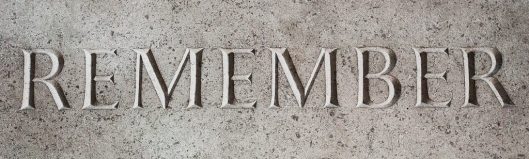
“Don’t Just Tell Them Not to Forget… Tell Them to Remember”

17 Friday Oct 2025

Posted by The Book Chamber in Culture, Educational Leadership, Intentional, Know Your Why, Leader, Leadership, Purpose, Remember, Value

≈ Leave a comment

Tags

business, Education, Educational Leadership, Leader, Leadership, Learning, Respect, school, Teachers, teaching

I am currently reading The Barn – The Secret History of a Murder in Mississippi by Wright Thompson. If you have not read the book, I highly recommend it. The book honors both personal heritage and the enduring lessons drawn from the story of Emmett Till that continue to shape the South’s identity and hope. On a personal note, as I mentioned to a friend the other day who is also reading the book, Chapter Two contains the best history of Mississippi that I have ever read or heard, encompassing many aspects of Mississippi history that I never learned in school. Throughout the book, a theme emerges that I keep seeing: “Don’t just tell them not to forget, tell them to remember.” As I reflect on this theme, I see how it highlights how often we tell people, “Don’t forget,” but rarely do we say, “Remember.” What a subtle difference, but a powerful one, especially in education and leadership.

“Don’t forget” is defensive. It’s a warning, a plea against loss. It assumes negligence and expects compliance. “Remember,” on the other hand, is invitational. It calls us to hold something sacred, to intentionally bring forward what matters most. One is about avoiding failure; the other is about preserving meaning. It’s about taking ownership of what we hold dear.

This idea of remembrance isn’t just philosophical, it’s timeless. Even in popular culture, echoes of this truth appear. In the movie 300, King Leonidas commands his soldiers, “Remember this day, men, for it will be yours for all time.” His charge was not merely about memory; it was about meaning. It was a call to anchor courage, sacrifice, and identity in something worth remembering. Later, as the lone survivor, Dilios fulfills his king’s final wish: “Remember us. As simple an order as a king can give. Remember why we died.” These lines capture the essence of remembrance as legacy, holding fast to what gives purpose to the struggle.

Educational leaders face this tension every day. General thoughts consist of… We are reminded not to forget deadlines, lesson plans, or data reporting, but do we invite educators to remember why they teach? We caution students not to forget assignments, but do we spend time helping them remember the joy of discovery, the dignity of effort, the wonder of learning? We are an integral part of this process, and our value lies within the core of how we help others connect their work to purpose. 

To “remember” is to root ourselves in purpose. It is to carry forward the lessons, values, and relationships that shape our work. I believe when we lead from a remembrance mindset, we help others reconnect with the “why” beneath the “what.” We help build and sustain cultures where the vision and mission are not just recited but recalled from personal experience, vividly and often. Remembering becomes intentional. 

This act of remembrance is also deeply rooted in Christian values at its core. Throughout Scripture, God continually calls His people to remember. “Remember the Lord your God” (Deut. 8:18). “Do this in remembrance of Me” (Luke 22:19). When we remember God’s faithfulness, we lead differently. We teach with patience, we listen with compassion, and we serve with humility. God knows that what we remember shapes what we value, and what we value directs how we lead.

So today, don’t just tell others not to forget. Tell them to remember. We all have the capability to instill this mindset in others around us. So, why not give it a try? 

So maybe the better question is not “What have we forgotten?” but “What must we remember?”

Remember the teacher who made a difference in your life, Remember the student who just needed one person to believe in them, Remember that education is a calling for you for our future, Remember who others are, Remember the One who called you, And in that remembering, remember to keep the heart of education alive…

As you step into your role today, remember that you are not just an educator and leader but a shaper of the future. Your actions and decisions profoundly impact the lives of those you guide. Go, be the great educator and leader that our future needs.

Remember… Think Leadership and Be For Others…

©2025 J Clay Norton

Want more Leadership Thoughts? Follow me on… X @thebookchamber or follow the blog directly.

Share this:

  • Tweet
  • Click to email a link to a friend (Opens in new window) Email
  • More
  • Click to print (Opens in new window) Print
  • Share on Tumblr
Like Loading...

Narcissism: From Decay to Destruction in Leadership.. Born of Selfish Pride

19 Friday Sep 2025

Posted by The Book Chamber in Actions, Attitude, Character, Christian Worldview, Culture, Decay, Decisions, Decline, Disaster, Educational Leadership, Empathy, Facade, Humility, Influence, Narcissism

≈ Leave a comment

Tags

AuthenticLeadership, business, CharacterMatters, Education, Educational Leadership, EgoVsHumility, Humility, Leader, Leadership, LeadershipDevelopment, LeadershipMatters, Learning, Narcissism, PrideBeforeTheFall, Respect, school, SelflessLeadership, ServantLeadership, Teachers, teaching, toxic, ToxicLeadership, TransformationalLeadership

C. S. Lewis, in some of his sermons and in Mere Christianity1, described pride as “the great sin.” Unlike other vices, pride stands in direct opposition to God because it refuses to acknowledge anything greater than itself. Yet it is important to distinguish between two forms of pride. A healthy sense of self-pride, rooted in the acknowledgment of God-given worth and responsibility, is not wrong. In fact, it equips leaders to carry their responsibilities with courage and stewardship. But… when pride distorts into selfish pride, it eclipses truth, humility, and service. Lewis noted that pride thrives in comparison; it is never content with being good or accomplished, but only in being better than others. Such pride blinds a person to truth and breeds contempt for those they are meant to serve. What Lewis made clear is that selfish pride is not just a character flaw; it is the root of spiritual decay.

Lewis’ warning about spiritual decay finds a striking parallel in leadership. I’m sure we all have our own definition of what narcissism is, but in my own summation, narcissism is an excessive preoccupation with self, marked by entitlement, a hunger for admiration, and a lack of empathy. I’ll go ahead and ask the question now, “Do you know anyone like this?”

In practice, this reveals itself not as guidance but as domination. A narcissistic leader seeks followers, not partners. They crave admiration rather than accountability. Instead of building others up, they drain their teams through manipulation and the constant need for validation. Over time, this dismantles trust. Where vision and service should flourish, control and fear take their place, creating a toxic environment. As Lewis warned, pride always leads to enmity… enmity between man and man, and between man and God. Ultimately, narcissistic leadership destroys the very community it was entrusted to grow. What often goes unseen is that narcissism is not born of strength but of insecurity… the louder the ego demands admiration, the weaker the foundation it is hiding.

This kind of destruction rarely begins with open arrogance; it begins quietly. We often hear that there is a fine line between ideas, ideals, and ideology, and just as the line between healthy self-pride and destructive selfish pride grows ever thinner, it is along that fragile divide that narcissism quietly takes root. True self-pride affirms God-given identity and responsibility, but selfish pride inflates the ego until it eclipses everything else, even the heart. That distortion gives birth to narcissism, and when it goes unchecked, it erodes the very foundations of leadership.

Yet having a Christian worldview foundation points us in a better way. Christlike, servant-based leadership offers a stark contrast: humility, service, and sacrifice. True leaders draw strength not from self-exaltation but from self-forgetfulness. As Lewis observed, “the truly humble man will not be thinking about humility: he will not be thinking about himself at all.” Such leaders recognize their worth in God and extend that recognition to others. In this light, self-pride does not become arrogance but stewardship, the courage to carry responsibility without turning it into a throne, worshiped only by selfish pride, that only a narcissist can sit on.

When self-pride morphs into selfish pride, narcissism becomes the master. Leadership ceases to serve a higher purpose and instead serves only the leader’s ego. In that shift, both the leader and the community lose their way. Lewis captured it perfectly: “A proud man is always looking down on things and people; and, of course, as long as you are looking down, you cannot see something that is above you.” Leadership dies in the gaze of narcissism, but it flourishes in humility.

1Lewis, C. S. (1952). Mere Christianity. Geoffrey Bles.

As you step into your role today, remember that you are not just an educator and leader but a shaper of the future. Your actions and decisions profoundly impact the lives of those you guide. Go, be the great educator and leader that our future needs.

Remember… Think Leadership and Be For Others…

©2025 J Clay Norton

Want more Leadership Thoughts? Follow me on… X @thebookchamber or follow the blog directly.

Share this:

  • Tweet
  • Click to email a link to a friend (Opens in new window) Email
  • More
  • Click to print (Opens in new window) Print
  • Share on Tumblr
Like Loading...

Beyond Today: The Transitive Power of Educational Leadership

05 Friday Sep 2025

Posted by The Book Chamber in Actions, Culture, Education, Educational Leadership, Leader, Leadership, Legacy, Memories, Transitive Power, Trust

≈ 1 Comment

Tags

business, Education, Educational Leadership, Leader, Leadership, Learning, Respect, school, Teachers, teaching

I just finished reading Malcolm Gladwell’s The Bomber Mafia, and I was particularly interested in one idea (the entire book is full of fascinating knowledge by the way). Gladwell describes how ideas and memories rarely remain with the individuals who first hold them. Instead, they move, transitive in nature, living on in the lives of others. Though he applies this concept to military visionaries, it got me thinking about the work of educational leadership.

As leaders, the choices we make, the words we speak, and even the ways we handle pressure often become part of the memory banks of those around us, becoming a powerful motivator on how we lead. A teacher remembers how a principal treated staff with dignity during a crisis. A student recalls the fairness of a discipline decision long after graduation. A young educator shapes their own leadership style based on how they once watched a mentor navigate conflict. These moments are not fleeting; they migrate, they live on.

This realization reframes how we can see daily leadership in schools. Schools are not just institutions where knowledge is delivered but also where memories are forged. Those memories are carried forward, reinterpreted, and acted upon in the lives of others. With this thought of transitive action, leadership, then, can become less about immediate outcomes and more about shaping a lasting legacy of influence, one that helps define the climate and culture for the future, trusting the process. 

The sobering truth is that we don’t control which memories will stick. Sometimes a single act of impatience can overshadow months of encouragement. But the hopeful truth is also there: small acts of kindness, humility, and consistency often become the anchors others draw on years later. As I sit here writing, I realize the transitive power of my mentors, how their wisdom lives on in me, how it continues to influence my leadership, and how it extends to others.

Educational leadership, then, is memory-making work. The question for each of us becomes: What memories am I leaving behind that others will live into?

As you step into your role today, remember that you are not just an educator and leader but a shaper of the future. Your actions and decisions profoundly impact the lives of those you guide. Go, be the great educator and leader that our future needs.

Remember… Think Leadership and Be For Others…

©2025 J Clay Norton

Want more Leadership Thoughts? Follow me on… X @thebookchamber or follow the blog directly.

Share this:

  • Tweet
  • Click to email a link to a friend (Opens in new window) Email
  • More
  • Click to print (Opens in new window) Print
  • Share on Tumblr
Like Loading...

“Asset-based narrative” – It’s what we need in educational leadership for our schools…

25 Wednesday Jun 2025

Posted by The Book Chamber in Accountability, Achieve, Actions, Advice, Appreciation, Attention, Choice, Culture, Education, Educational Leadership, Effective, Emotion, Emotional Temperature, Empower, Encouragement, Expectations, Idealist, Importance, Know Your Why, Leader, Leadership, Students, Teachers, Trust, Value

≈ 1 Comment

Tags

Education, Educational Leadership, Leader, Leadership, Learning, school, Teachers, teaching

I was sitting in on a dissertation defense a few weeks ago, and the phrase “asset-based narrative” came up. This phrase, it got my head tingling, and I began to think about a connection to educational leadership. So, here’s what I came up with…

In education, leadership is not about what we meant to do, it’s about what we actually do. Good intentions are noble, but outcomes are what matter. Our schools, communities, and students live in the reality of our actions, not in the shadows of our intentions. That’s why we must begin to define leadership through an “asset-based narrative,” one that sees strength, not deficiency, and leads through what is possible rather than what is lacking.

Society often pressures leaders to control the narrative. Headlines, social media, and political climates push school leaders to respond quickly, to spin, to protect optics. But real leadership resists this impulse. True leadership defines the narrative… rooted not in fear or reaction but in clarity, purpose, and evidence of care. It says: “Here is who we are, what we value, and how we’re building something better.”

An “asset-based narrative” invites us to lead through celebration and contribution. It shifts our focus from what educators or schools “aren’t doing” to what they are accomplishing against real odds. It sees teachers as resilient, students as capable, and communities as partners. It reframes setbacks as opportunities to grow, not indictments of failure.

When we define the narrative, we move from defense to offense. We stop chasing reputations and start building legacies. And we do so by aligning our actions with what we say we believe. Because in education, as in life, leadership isn’t measured by the stories we wish had been told, it’s measured by the stories we choose to write with courage, consistency, and hope.

The question is not, “What did we mean to do?” The question is, “What did we do, and how did it build a better story for those we serve?” I think it’s worth taking a look at to see if we can find and define more of what we do in education based on the thought of “an asset-based narrative.”

As you step into your role today, remember that you are not just an educator and leader but a shaper of the future. Your actions and decisions profoundly impact the lives of those you guide. Go, be the great educator and leader that our future needs.

Remember… Think Leadership and Be For Others…

©2025 J Clay Norton

Want more Leadership Thoughts? Follow me on… X @thebookchamber or follow the blog directly.

Share this:

  • Tweet
  • Click to email a link to a friend (Opens in new window) Email
  • More
  • Click to print (Opens in new window) Print
  • Share on Tumblr
Like Loading...
← Older posts
Follow The Book Chamber on WordPress.com

Enter your email address to follow this blog and receive notifications of new posts by email.

Follow me on Twitter

My Tweets

Archives

  • December 2025 (2)
  • November 2025 (2)
  • October 2025 (3)
  • September 2025 (2)
  • August 2025 (1)
  • June 2025 (1)
  • May 2025 (4)
  • April 2025 (4)
  • March 2025 (2)
  • February 2025 (4)
  • January 2025 (4)
  • December 2024 (4)
  • November 2024 (4)
  • October 2024 (2)
  • September 2024 (4)
  • August 2024 (4)
  • May 2024 (2)
  • April 2024 (4)
  • March 2024 (3)
  • February 2024 (4)
  • January 2024 (3)
  • December 2023 (4)
  • November 2023 (3)
  • October 2023 (3)
  • September 2023 (4)
  • August 2023 (4)
  • July 2023 (1)
  • May 2023 (3)
  • April 2023 (4)
  • March 2023 (4)
  • February 2023 (4)
  • January 2023 (3)
  • December 2022 (4)
  • November 2022 (3)
  • October 2022 (4)
  • September 2022 (5)
  • August 2022 (3)
  • May 2022 (4)
  • April 2022 (5)
  • March 2022 (3)
  • February 2022 (4)
  • January 2022 (4)
  • December 2021 (3)
  • November 2021 (3)
  • October 2021 (5)
  • September 2021 (4)
  • August 2021 (3)
  • May 2021 (3)
  • April 2021 (5)
  • March 2021 (3)
  • February 2021 (3)
  • January 2021 (4)
  • December 2020 (3)
  • November 2020 (3)
  • October 2020 (5)
  • September 2020 (4)
  • August 2020 (2)
  • June 2020 (1)
  • May 2020 (3)
  • April 2020 (4)
  • March 2020 (1)
  • February 2020 (4)
  • January 2020 (4)
  • December 2019 (3)
  • November 2019 (4)
  • October 2019 (4)
  • September 2019 (4)
  • August 2019 (3)
  • July 2019 (1)
  • June 2019 (1)
  • May 2019 (3)
  • April 2019 (4)
  • March 2019 (4)
  • February 2019 (4)
  • January 2019 (3)
  • December 2018 (3)
  • November 2018 (4)
  • October 2018 (4)
  • September 2018 (4)
  • August 2018 (4)
  • July 2018 (1)
  • June 2018 (1)
  • May 2018 (4)
  • April 2018 (4)
  • March 2018 (4)
  • February 2018 (4)
  • January 2018 (3)
  • December 2017 (4)
  • November 2017 (3)
  • October 2017 (4)
  • September 2017 (5)
  • August 2017 (3)
  • July 2017 (1)
  • June 2017 (4)
  • May 2017 (19)
  • April 2017 (9)

Categories

  • A Christmas Story
  • Accountability
  • Achieve
  • Achievement Gap
  • ACME Math Guys
  • Acquaintance
  • Actions
  • Adaptability
  • Advantage
  • Adventure
  • Adversity
  • Advice
  • Advocate
  • Affection
  • Agenda
  • Align
  • Amazing
  • Amnesia
  • Anchored
  • Andy Griffith
  • Annoying
  • Appreciation
  • Assist
  • Attention
  • Attitude
  • Authentic
  • Balance
  • Banning Books
  • Bitterness
  • Brand
  • Camaraderie
  • Captive
  • Change
  • Character
  • Charlie Brown
  • Choice
  • Christian Worldview
  • Christmas
  • Christmas Vacation
  • Circumstances
  • Clarity
  • Classroom Leadership
  • Classroom Management
  • Clear
  • Comfort Zone
  • Commitment
  • Communication
  • Company
  • Compassion
  • Complacency
  • confidence
  • Conflict
  • Connections
  • Conscience
  • Consistency
  • Contentment
  • Context
  • Conversations
  • Conviction
  • coronavirus
  • Counseling
  • Courage
  • COVID-19
  • covid19
  • Craft
  • Crisis
  • Culture
  • Decay
  • Deciding
  • Decisions
  • Decline
  • Description
  • Desire
  • Detox
  • Dignity
  • Disaster
  • Distance
  • Distance Learning
  • Distractions
  • Dr. Seuss
  • Drift
  • Easter
  • Echo Chamber
  • Education
  • Educational Leadership
  • Effective
  • Embrace
  • Emotion
  • Emotional Temperature
  • Empathy
  • Empower
  • Encouragement
  • Engagement
  • Entertainment
  • Essence
  • Exercise
  • Expectations
  • Experience
  • Expertise
  • Expiration dates
  • Facade
  • Fair and Equitable Education
  • Family
  • Feedback
  • Focus
  • Foundation
  • Freedom
  • Friendship
  • Funding
  • Future
  • Gift
  • Giving
  • God
  • Grace
  • Grading
  • Gratitude
  • Gravitas
  • Grit
  • Growth
  • Heart
  • Heroes
  • History
  • Honest
  • Hope
  • Hope Stealer
  • Humility
  • Idealist
  • Ideals
  • Idioms
  • Illusions
  • Importance
  • Influence
  • Insecurity
  • Inspiration
  • Integrity
  • Intensity
  • Intentional
  • Intentions
  • Intolerance
  • Issues
  • It's a Wonderful Life
  • Jesus
  • Joy
  • Kindness
  • Know Your Why
  • Knowledge
  • Leader
  • Leadership
  • Learning
  • Legacy
  • Legislators
  • Lesson Plans
  • Light
  • Listening
  • Looney Tunes
  • Love
  • Loyalty
  • Mandates
  • Manipulation
  • Mask
  • Math
  • Maturity
  • Meetings
  • Memories
  • Mercy
  • Message
  • Misery
  • Mission
  • Mixed Signals
  • Momentum
  • Motivation
  • Narcissism
  • NERDLE
  • New School Year
  • Obedience
  • Observation
  • Opinions
  • Opportunity
  • Passion
  • Passive-Agressive
  • Patience
  • Peculiar
  • Perception
  • Perceptions
  • Perseverance
  • Pet Peeves
  • Pitfalls
  • Power
  • Preparation
  • Presence
  • Present
  • Pressure
  • Pride
  • Professionalism
  • Promotion
  • Public Schools
  • Purpose
  • Reading
  • Reality
  • Reflection
  • Relationships
  • Remember
  • Resilience
  • Respect
  • Rest
  • Sacrifice
  • School Choice
  • school consolidation
  • School Supplies
  • Sensitive
  • Servant
  • Shadows
  • Sincerity
  • Sinkholes
  • Smile
  • Spring Break
  • Standard
  • Star Wars
  • Students
  • Teacher Appreciation
  • Teacher Shortage
  • Teachers
  • Team
  • Technology
  • Tension
  • Testing
  • Thankful
  • Thanksgiving
  • The Masters
  • Time
  • Tolerance
  • Transactional
  • Transfer Portal
  • Transformational
  • Transitive Power
  • Transparent
  • Tribute
  • Trust
  • Truth
  • Uncategorized
  • Understanding
  • Unity
  • Useful
  • Value
  • Vision
  • Vouchers
  • Whole
  • Wisdom
  • Word
  • WORDLE

Blog Stats

  • 48,774 hits

Blog at WordPress.com.

  • Subscribe Subscribed
    • The Book Chamber
    • Join 182 other subscribers
    • Already have a WordPress.com account? Log in now.
    • The Book Chamber
    • Subscribe Subscribed
    • Sign up
    • Log in
    • Report this content
    • View site in Reader
    • Manage subscriptions
    • Collapse this bar
 

Loading Comments...
 

    %d