
Pressure Is Opportunity

While watching ESPN College Game Day at the Cotton Bowl for the “Red River Rivalry” between Oklahoma and Texas this past Saturday morning, Brent Venables, Oklahoma’s head coach, was interviewed. During the interview, one statement he made stood out. When asked how he and his players felt about being the underdog and not picked to win, he stated, “Pressure is opportunity.” I looked at Breana and said, “There’s my blog for next week.”

We often hear phrases such as…
They can’t handle the pressure…
They were under a lot of pressure…
Subjected to pressure…
Peer pressure…
Under pressure…

All of these have a negative connotation. Pressure is often associated with stress and discomfort. When was the last time we heard about pressure being on the positive side?

Leadership will always have pressure situations, making it a natural component. How we view those pressure situations will determine our leadership mindset. Deadlines, critical decisions, crises, etc… these situational moments allow for resilience, adaptability, and maybe even ingenuity to be seen.

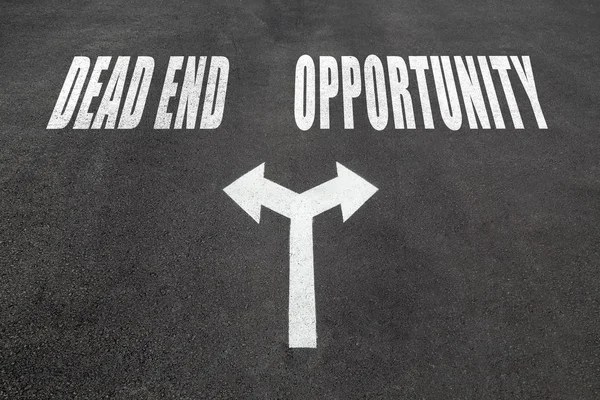
Leadership has only two options when confronted with pressure. Seize the moment and showcase capability, or don’t. However, it’s always an opportunity. It takes little time for true leadership to emerge.

depositphotos_168985078-stock-photo-dead-end-vs-opportunity-choice

Think about it this way: pressure is movement. It either pushes or pulls.
In essence, it’s force. An often heard quote, “A diamond is a hunk of coal that made good under pressure.” Even though this is untrue, the metaphor is good. As a leader, we all have what our perceived limits are. Will we make good under pressure?

As a result, pressure always forces change. We are where we are, adapting to the given environment and continuing to succeed or deteriorating under pressure. Suppose leaders adopt the mentality that pressure encourages personal growth and achievement; then, experiences create memory moments that help forge future opportunities, teaching invaluable lessons and ultimately shaping their character and competence.

You want to be a quality leader? Reframe how you look at pressure. Unlock the potential that pressure offers. Empower yourself and embrace the opportunity.

Go be a great educator and leader today… Our future needs it…

Remember… Think Leadership and Be For Others…

©2023 J Clay Norton

Want more Leadership Thoughts? Follow me on… Twitter @thebookchamber or follow the blog directly.

Want to share this leadership thought with others? Click on one of the social media sharing buttons below and help spread the good…

Leadership About Nothing…

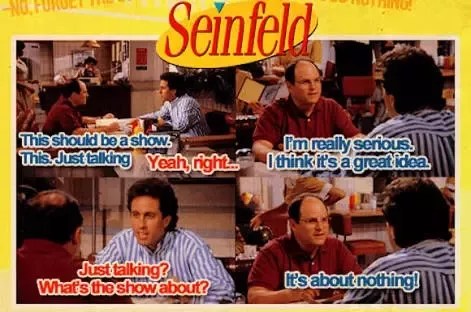
For many of us, we are showing our age now. From 1989 – 1998, Seinfeld was on the air. The plot… Nothing. Unless you heard Jerry and George say it when they were trying to pitch their show in one of the episodes, I wonder if it really ever registered. Now, we watch the reruns on Netflix, fast-forwarding thirty-plus years; I pick up on different aspects of the episodes and the nuisances.

main-qimg-5e8f292008141a469264a16318bc4f7d

Thinking on this the other day, I realized I couldn’t wrap my mind around a topic that wasn’t a needed discussion for this week’s blog. So I thought, “How do I write about nothing?” That’s when I realized that maybe I do have something…

Think about it this way: society constantly urges us to be on the move, achieve more, and accumulate stuff. These unofficial mandates bring to mind the profound lessons that “nothing” can teach and help us with our leadership. Now, you might be thinking, where is this going, and isn’t “nothing” about leadership paradoxical?

Well, a few thoughts… the more I think about it, the more I realize that “nothing” provides valuable insights into the effectiveness of our leadership and its self-awareness…

When “nothing” happens, a state of stillness happens, and the mind is clear of preconceived notions. This allows for the open space of creativity, critical thinking, and, most importantly, active listening (something that I will continue to work on personally).

Many leaders who have the characteristics of “look at me,” “see me,” and “hear me” cannot set aside their ego. They constantly want to assert themselves, creating an environment where others are fearful to speak and contribute. These are the leaders who definitely think they are and have “something.”

Leadership is also about letting go of unnecessary burdens, distractions, and clutter… essentially embracing “nothingness” to focus on what truly matters. Quality leadership prioritizes goals and actions aligned with the overall well-being of others. They simplify the complexities and remove barriers to progress. They discern what is essential from what is not needed, leading successfully with clarity and purpose.

“Nothing” also symbolizes humility and the willingness to admit when one doesn’t know or understand something. We need more leaders who can accept this. Great leadership is not afraid to acknowledge gaps in their knowledge or experience, seeking guidance and learning from others. When this happens, humility fosters a culture of continuous growth and improvement, benefiting everyone.

My great mentor, Dr. Hassleman, used to say, “Leadership is not hard; just do the right thing by people.” In some way, I see the value of “nothingness” in this. By taking myself out and putting others in, we open ourselves up to endless possibilities. It’s a fascinating concept when we think of leadership this way. Our decision-making will be better, and connections will become more genuine. That’s what leadership needs… genuineness. It’s amazing what you can get out of nothing.

Go be a great educator and leader today… Our future needs it…

Remember… Think Leadership and Be For Others…

©2023 J Clay Norton

Want more Leadership Thoughts? Follow me on… Twitter @thebookchamber or follow the blog directly.

Want to share this leadership thought with others? Click on one of the social media sharing buttons below and help spread the good…
Leadership & Loyalty: The Power of Who’s in Your Circle

IMG_5788

I saw this the other day on Facebook. I’m a huge fan of the movie Tombstone, especially with Kurt Russell and Val Kilmer respectfully playing Wyatt Earp and Doc Holiday.

As I looked and thought about that picture, I realized the amount of unsaid leadership in it and how it holds profound significance. True leadership isn’t about amassing a large following but cultivating a loyal and dedicated team. Large followings take up more than space.

How often have you seen leaders who amass a following because it makes them feel “large and in charge?” They believe “strength in numbers” belongs to how they manage their many minions. Their “circle” is as big as the equator and is more of a hole than being whole.

A few thoughts regarding a tight circle of loyalty…

  1. Quality over quantity – It’s about depth and substance. The smaller the circle, the stronger it is. Too many times we find others who do nothing more than take up oxygen.
  2. Loyalty breeds commitment – Being around like-minded people with kindred spirits is contagious. I love it when I see others want others to succeed in their group; why would you not? On the flip side, we see some who can’t shine the spotlight on others because they have an iron fist holding the spotlight on themselves.
  3. Mutual trust and respect – Large circle wannabe leaders demand both from others without giving it themselves. Trust and respect go both ways and foster an environment of unity. Tight circle loyalty understands the strengths and weaknesses and embraces them for success.
  4. Resilience – When adversity hits, that circle’s bond gets tight. Loyalty will never turn its back. Oh, but how many leaders do just that?
  5. Inspiring – How often do we see leaders who mandate orders and micromanage others to loyalty of fear? Inspirational leaders are models and radiate.
  6. Longevity – Stands the test of time and does not sway with the trends. Enduring success comes from loyalty within the circle, not outside it.

I showed the above picture to a friend the other day and said, “You know, my circle is getting smaller and smaller the older I get.” My friend stated, “Yes, it does.” However, I never want it to become a dot where it’s only me. But amazingly, I see many leaders who become a dot because no one wants to be in their circle.

Leadership is not a numbers game, but so many want it that way. With an entourage, they are carried on the shoulders of those who bow and cower. The thought, “It’s not about the size of the circle; it’s the loyalty in it,” captures the essence of effective leadership, ultimately achieving remarkable outcomes and leaving a lasting legacy.

Go be a great educator and leader today… Our future needs it…

Remember… Think Leadership and Be For Others…

©2023 J Clay Norton

Want more Leadership Thoughts? Follow me on… Twitter @thebookchamber or follow the blog directly.

Want to share this leadership thought with others? Click on one of the social media sharing buttons below and help spread the good…

Do We Know Who We Are Anymore?

Quick question for everyone… How many of us still watch the news? Our house does not. However, like many, we receive our information, and most updates, for that matter, from phone apps and social media. Now I do love listening to talk radio. It keeps my mind off of having road rage.

Time is one of the issues; I don’t remember the last time I was at home at 5 or 6 o’clock to sit down to watch the news. Another reason is that it is depressing and can irritate you. The other reason is the “news” has already happened, and I cannot do anything about it.

I ask and say all of the above to say this… Every time I watch or listen to the news, I realize that society, in general, is fighting generational and cultural differences to a point at which right vs. wrong is becoming something way more than relative. Blame can be placed on the older generations as much as on the younger ones.

I get it; every generation has its own values, beliefs, and cultural norms that evolve over time. People nowadays often embrace new ideas and challenge existing norms, creating friction. The knowledge and belief gap that exist can make changing or influencing cultural norms difficult. I’m not against fighting the status quo (a lot of good has come from it), but we are flirting and tip-toeing in areas causing future generational ramifications and setbacks we may never recover from.

who_are_we

A few thoughts…

  1. Human beings, by nature, can be resistant to change. Not to say that change is either good or bad, but we are creatures of habit. Contrasting views of cultural norms are usually seen as a threat to one’s own values or traditions, leading to resistance and opposition. We know what happens when people are threatened…
  2. There is a limited perspective of tolerance and intolerance. One side becomes intolerant when the other is not, and vice versa. It almost begs the idea that there is an intolerance of tolerance. Some beliefs do not want tolerance. There are many beliefs that I do not fully understand, appreciate or accept, but at the same time, I have no desire to. This doesn’t make me more right or more wrong, so the context of the belief becomes irrelevant.
  3. There is an identity crisis in the making. It is really hard to determine who people really are anymore. Talk about power dynamics… when disagreements occur, many feel as though their identity is being attacked. Seemingly, we are forced to adapt to their extreme as such.
  4. Who’s the authority? When you feel no one is “in charge,” you can assert your independence and autonomy however you please. Here lies a problem: imposing beliefs creates resistance to authority and an acknowledgment to a moral code ceases.
  5. Incremental change has long been happening. We see it before our eyes, while at the same time, we ask ourselves, “How did we get here so fast?” Slow change creates an absorbing acceptance when enough people encounter a belief system, be it right or wrong, and decide to take stand.

Most of the time, I think I have an answer for almost anything. But, as time moves forward and I grow older, I’m not sure anymore. I’m sure the generations before us worried about the future, and now I agree with them. It will be interesting. Cultural norms are not fixed, and they will continue to evolve.

Where you stand with your beliefs is ultimately your business. I know where I stand with mine. Some will agree, and some will disagree; to each their own. But make no mistake, cultural change is happening, and division will always be among us. Ultimately, we must look in the mirror and decide who we really are, and know that we do not have to walk around with an agenda all the time.

Go be a great educator and leader today… Our future needs it…

Remember… Think Leadership and Be For Others…

©2023 J Clay Norton

Want more Leadership Thoughts? Follow me on… Twitter @thebookchamber or follow the blog directly.

Want to share this leadership thought with others? Click on one of the social media sharing buttons below and help spread the good…