
HB1433 Shows Desperation Breeds Dependence: The Hidden Costs of School Vouchers and School Choice on Mississippi Public Schools

Tags

, , , , , , , , , , , ,

Word on the street is that HB1433, a bill for school voucher and school choice has been proposed… and You can read the entire bill here: HB1433IN . Thoughts?

Why is this important?

A quick Google search stated that right at 90% of students attend public schools in Mississippi. Many of these students come from low-income, rural, or underserved communities. HB1433 would take funds away from public schools, leaving them with fewer resources to meet the needs of their students. Also, HB1433 will allow students in a “D” or “F” school within the past five years to enroll in a higher-performing school, district, or accredited nonpublic school. If this is not a school choice and voucher bill, what is it? Taxpayer monies, base student costs, will travel to private schools. Also, HB1433 does not require private schools or nonpublic educational programs to adhere to the same accountability standards as public schools, such as standardized testing, financial transparency, or other admissions policies. This lack of oversight opens the door to misuse of funds and a widening achievement gap. And, here, I thought we were trying to close the achievement gap…

When people and organizations face struggles, desperation can lead to decisions that have lasting, unintended consequences. The increasing legislative push toward school vouchers and choice programs is a glaring example of the desperation Mississippi’s legislature is trying to bring to public education. These programs are being “thrown out there” as solutions to solve education challenges. But they often make matters worse for the very problems they claim to solve.

Desperation arises when public schools face chronic underfunding, crumbling infrastructure, and teacher shortages. Instead of addressing these root issues, voucher and choice systems redirect resources, leaving public schools with fewer funds to serve the majority of students. Mississippi public schools cannot afford this erosion of its public education system.

Voucher programs create a dependence on private institutions and higher-performing school districts. While public schools serve ALL in their zone freely, many private schools have admission requirements. Also, what happens to those from low-income families who cannot afford additional costs beyond the voucher amount. This selective enrollment leaves public schools with the most challenging and costly-to-serve students, further stretching their already limited resources.

Vouchers weaken the social contract that binds communities together. Public schools are more than educational institutions; they are cornerstones of neighborhoods, fostering unity and shared responsibility. When resources are siphoned, little by little, off to private schools, the public system loses funding and the collective investment of parents, teachers, and leaders.

Mississippi’s public schools need more than lip service and legislative organizational support; they do not need a patchwork solution that leaves them even more vulnerable. True leadership requires addressing the systemic challenges head-on: equitable funding, better teacher pay, and meaningful reforms. We, school leaders and the MS legislature, need to strengthen public schools to ensure a brighter future for every child, not just a select few. HB1433 will cause more harm than good.

As you step into your role today, remember that you are not just an educator and leader but a shaper of the future. Your actions and decisions profoundly impact the lives of those you guide. Go, be the great educator and leader that our future needs.

Remember… Think Leadership and Be For Others…

©2025 J Clay Norton

Want more Leadership Thoughts? Follow me on… X @thebookchamber or follow the blog directly.
Yes, Public Schools Should Be Able To Advocate For Themselves…

Tags

, , , , , , , , , , , , ,

The 2025 Mississippi Legislative is happening, and educational issues are always on the table.

Let’s go back a week or so and look at a school district in Mississippi that distributed a flyer outlining their stance on various legislative matters, sparking a wave of online discussion. While they received some negative comments, there was also online support, proving their voice was heard.

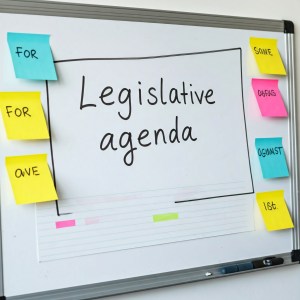
What was on the flyer, you ask? In summary, they were for… Teacher pay raise, revision of the Mississippi Student Funding Formula, and increased emphasis on Career and Technical Education. As a district, they were against… Open enrollment/school choice, educational vouchers for private school tuition, and any decrease in retirement benefits of PERS employees.

As a public school educator, I agree with everything they stated. I’m not writing to debate their points with anyone. However, for what general reason do I agree? While public schools have many advocates, and I’m thankful for every one of them, who better to be an advocate than themselves? Which is what I would like to discuss…

Public schools are not just educational institutions; many are the cornerstones of our communities. They shape the educational experiences of our children, who form the future of our society. While other educational options exist, public schools play a unique and vital role. It’s crucial for them to engage in advocacy to ensure that proposed legislation aligns with the needs and aspirations of the students, educators, and families they serve.

Public schools are uniquely knowledgeable in providing valuable insights into the practical implications of proposed policies by articulating their positions on legislative matters, for they are the ones who know what public school education is and is about. The need for public schools to be part of the proactive engagement of self-advocacy should hopefully help legislators make informed decisions that support effective educational practices and promote student success in our public schools. It would seem that legislators would want to give an ear to those who know education.

School leaders who freely open lines of communication with their thoughts on legislative priorities foster transparency and encourage community involvement. That’s why many communities’ strength lies in the fact that they have a strong public school presence. Self-advocacy not only empowers stakeholders, parents, teachers, and community members to participate actively in the democratic process but also ensures that the community’s collective voice is heard in policy discussions, which should make them an integral part of the process. But, as we all know, you have to be willing to listen. Hearing is one thing; listening is altogether another.

It is also worth noting that many elected state officials have outlined their own legislative priorities for the upcoming session. Is there any difference when our elected officials have their own priorities and agendas? Some are valid and good, while some, I do not believe, represent the best for the overall good of public school education and the teachers. In this context, it is pertinent and reasonable for public schools to advocate for their positions on these and other legislative matters that directly impact their operations and the well-being of the public school institution.

But I need to digress. You might be tired of reading, so I’ll close with this…  

“Courage favors the bold,” and it is not only acceptable but also essential for public schools to advocate for themselves in legislative matters. Such advocacy helps pave the way for what should ensure that educational policies are shaped by those who are most intimately involved in the day-to-day realities of teaching and learning, ultimately leading to a more responsive and effective education system. As I have often stated, when we have non-educators making educational decisions and not listening to those who actually know education, education becomes the victim of __________ (you can fill in the blank).

This action underscores the importance of public schools advocating for themselves within the legislative process. It’s a call to action and to advocate, a reminder of the power and influence public schools have in shaping their future. I’m glad this school district took an educational stand and would hope more districts will also. 

If you are interested in other blog posts relating to educational advocacy, click the links…

Are You, As A Teacher, An Advocate For Our Profession?

If Teachers Are Not An Advocate For Teaching, Then Who Will?

As you step into your role today, remember that you are not just an educator and leader but a shaper of the future. Your actions and decisions profoundly impact the lives of those you guide. Go, be the great educator and leader that our future needs.

Remember… Think Leadership and Be For Others…

©2025 J Clay Norton

Want more Leadership Thoughts? Follow me on… X @thebookchamber or follow the blog directly.

The Lost Art of Writing Thank You Notes…

Tags

, , , , , , , , , , , , , , , , , ,

In a world dominated by how people communicate… quick texts and emojis, Facebook Messenger, Instagram, Snapchat, TikTok, or if you are hanging on to your MySpace account, the timeless art of writing thank-you notes often feels like a relic of the past. Yes, I’m old school in many ways, but many things in life are timeless… some things just need to be practiced and maintained. Yet, the simple gesture of writing a thank you note carries profound meaning, connecting us to others in ways technology cannot replicate.

Many will say, “Thank you” upon receiving a gift, and that should be the correct response. However, a “thank you” is also a default response because it seems natural to say. Many people would say this is enough. Others will say that the recipient of a thank you note will just read it and throw it away. However, I believe these are misconceptions. Writing a thank-you note is not about the recipient’s reaction. It’s about the act of expressing your thoughtfulness and acknowledging the other person, which is always worthwhile. I guess my question is, “Why would you not?”

DALL·E 2025-01-09 10.14.23 - A nostalgic and elegant scene capturing the essence of writing thank-you notes_ a vintage wooden desk with a classic fountain pen, high-quality statio

Here’s why I believe reviving and writing thank-you notes is worth the effort, focusing on their personal touch, intentionality, expression of gratitude, and reflection of maturity.

Personal

A handwritten thank-you note is deeply personal; it is a reflection of you. Unlike generic messages or templates, it requires your time and thoughtfulness. The process of selecting stationery, coming up with the right words, and addressing the recipient shows you value the relationship. A thank you note may stir something and resonate emotionally, letting the recipient know they’re appreciated. You might not ever know what it will mean…

Intentional

Writing a thank-you note is an intentional act. It requires slowing down to reflect on what and why you are thankful for and how to express it meaningfully. This intentional approach goes against almost everything our digitized minds use with the instant gratification of modern communication. A thank-you note says, “I took the time to think about you,” which leaves a lasting impression.

Shows gratitude

At its heart, a thank-you note is a tangible carrier for gratitude. It conveys appreciation. Why? Normally, positive thought, effort, or care is behind a gift or gesture that someone gives. I believe this expression strengthens relationships, as it acknowledges and celebrates the kindness of others.

Maturity

Do not diminish this fact… Writing a thank-you note demonstrates an emotional maturity factor. It shows you understand the importance of recognizing others’ contributions and are willing to invest effort in maintaining meaningful connections. It’s a skill that transcends etiquette, reflecting character and integrity.

As I try to wrap my thoughts around which of the four is the most important…, I guess all four are needed to square the circle… Regardless, reviving the art of thank-you notes can transform relationships. It can bring warmth to a person and possibly to a world that often feels impersonal. As we know, too many people hide behind keyboards anyway…

Since we are coming out of the Christmas and holiday season, I reckon there has to be someone you can extend a thank you note to. All it takes is one note… A few heartfelt words on paper might seem small, but they carry immense power to foster connection and gratitude. To use the SEC words, “It just means more.”

As you step into your role today, remember that you are not just an educator and leader but a shaper of the future. Your actions and decisions profoundly impact the lives of those you guide. Go, be the great educator and leader that our future needs.

Remember… Think Leadership and Be For Others…

©2025 J Clay Norton

Want more Leadership Thoughts? Follow me on… X @thebookchamber or follow the blog directly.

Wishing you a Mathematical Christmas – 2024

Well, the ACME Math guys are back… How many combinations can the college playoff national championship brackets have?

Allen Marett and I stated doing these videos a few years ago and  just wanted to have some fun and spread some Christmas Math Love. Anyway… Here is our video for 2024. Hope you enjoy.

Here are the links to the previous four:

2020 https://www.facebook.com/100013664620751/videos/1080633885735422/

2021 https://www.facebook.com/100013664620751/videos/639236927490192/

2022  https://www.youtube.com/watch?v=C6pLBmnYxxs

2023 https://youtu.be/ioRd1uJi650?si=eZ66ELZqG2-9-6Wf

Let’s go fight the good fight of leadership. Someone has to…

Go be a great educator and leader today… Our future needs it…

Remember… Think Leadership and Be For Others…

©2024 J Clay Norton

Want more Leadership Thoughts? Follow me on… Twitter @thebookchamber or follow the blog directly.

Want to share this leadership thought with others? Click on one of the social media sharing buttons below and help spread the good…