
Tags
business, Education, Educational Leadership, Leader, Leadership, Respect, school, Teachers, teaching
I had a friend the other day who asked me a “hypothetical” leadership question. Well, I told them there really are no hypothetical questions when they are posed like that, so I asked them to just tell me the situation. They laughed, said, “You’re right,” and went on to explain what was happening. Somewhere in the middle of that conversation, I had my idea for the blog this week.
The details of the situation are not important, and honestly, the situation itself was not all that unusual and was trivial at best. Anyone who has spent much time in education has seen some version of it. There was conflict, there were different personalities involved, there were conversations taking place about other conversations, and there was enough back-and-forth to keep the situation alive much longer than it probably needed to be. Listening to the story, I thought that if I were the one having to deal with all of this, I would just as soon bang my head against the wall and give myself a headache on purpose.
What caught my attention, though, was not really the situation itself, but the drama it created. It was almost like watching a snowball roll downhill. Something that probably should have been relatively small just kept getting bigger as more people, more conversations, and more emotion became attached to it. By the time my friend finished telling me the story, my thoughts had moved beyond the original situation altogether and landed on something much more interesting: the role leadership can sometimes play in keeping drama going.
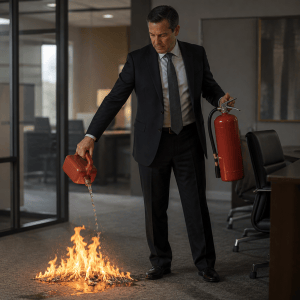
That led me to a question that may push the envelope a little: Do some leaders actually like drama?
I think some do, and I also think that, many times, it comes from insecurity.
There is something about drama that can make an insecure leader feel important. When everyone is coming to you with the latest information, you feel like you are in the know. When people bring their disagreements to you instead of working them out themselves, you feel needed. When you know who said what, who is upset with whom, and who is supposedly on which side, it can create a false sense of influence. Before long, the leader can begin to confuse being involved in everything with actually leading something, and that is where it becomes dangerous.
Secure leaders do not have to know everything that is being said in the building, nor do they need to be included in every disagreement. They do not need people choosing sides to determine who supports them, and they certainly do not need to keep a conflict alive simply because it gives them a place in the middle of it. In fact, good leadership should move an organization in the opposite direction. We should be developing people who can talk to one another, work through disagreements, address concerns directly, and move forward without every issue eventually finding its way into the leader’s office.
None of that means a leader should avoid conflict. There are times when leadership requires us to step directly into difficult situations, make hard decisions, and have conversations that nobody particularly wants to have. However, there is a tremendous difference between addressing conflict and feeding it, and I would argue that one of the better tests of our own security as leaders is what happens when everything is going well. Can we allow people to work, succeed, solve problems, and even receive recognition without needing to insert ourselves into the middle of it?
If we are always surrounded by drama, eventually we may need to stop asking why everyone else creates so much of it and consider a much more uncomfortable possibility.
Maybe we like it there.
Want to read a good leadership book on this? Here it is: Upgrade Your Leadership: 8 Foundational Tools to Overcome Drama, Build Trust, and Thrive Under Pressure
As you step into your role today, remember that you are not just an educator and leader but a shaper of the future. Your actions and decisions profoundly impact the lives of those you guide. Go, be the great educator and leader that our future needs.
Remember… Think Leadership and Be For Others…
©2026 J Clay Norton
Want more Leadership Thoughts? Follow me on… X @thebookchamber or follow the blog directly.

